Quick Answer
Missouri car accident reporting requirements depend on who you’re reporting to. You must stop and share your information at the scene. If an uninsured driver was involved and someone was hurt or damage topped $500, you have 30 days to file a written report with the Department of Revenue. Tell your own insurer promptly, and file any injury lawsuit within five years.
After a crash, everyone seems to have advice about what you need to do and how fast. Missouri car accident reporting requirements involve four separate deadlines, and each one applies to a different situation.
Knowing which clock applies to you takes a lot of stress out of the days after a crash.
This guide walks through each deadline in plain terms.
If you have questions about your own situation, call Halvorsen Klote Davis at 314-451-1314.
Key Takeaways About Missouri Car Accident Reporting Requirements
- Missouri law requires every driver in a crash with injury or property damage to stop and share identifying information.
- The 30-day written report to the Missouri Department of Revenue applies only when an uninsured motorist is involved.
- Your insurance policy sets its own notice deadline, usually “as soon as practicable.”
- Most Missouri injury lawsuits must be filed within five years of the crash.
- Missing one deadline rarely ends every option, but it might limit some of them.
What Are Missouri’s Car Accident Reporting Requirements?
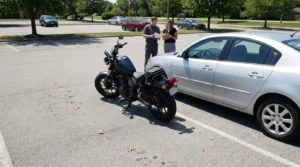 Missouri’s car accident reporting requirements fall into four separate clocks. One starts at the scene, one runs through the state, one runs through your insurance company, and one runs through the courts.
The Four Deadlines at a Glance
This table separates the four deadlines people most often confuse:
| Deadline | Who You Report To | When It Applies | Time Limit | Source |
|---|---|---|---|---|
| Stop and exchange information | Other driver, owner, or police | Any crash with injury, death, or damage to another person’s property | At the scene | RSMo 577.060 |
| Written accident report | Missouri Department of Revenue | An uninsured motorist was involved, and someone was hurt or property damage exceeded $500 | 30 days | RSMo 303.040 |
| Notice to your insurer | Your own insurance company | Any crash you might claim under your policy | Set by your policy, often “as soon as practicable” | Your policy |
| Injury lawsuit | Circuit court | Any personal injury claim | 5 years | RSMo 516.120 |
Do You Have to Stop and Report a Crash at the Scene in Missouri?
Yes. Missouri requires any driver involved in a crash with injury, death, or damage to another person’s property to stop and share identifying information. Leaving without doing so counts as a crime under RSMo 577.060.
Information You Must Share
Before leaving the scene, you must give the other driver, the property owner, or a police officer:
- Your name
- Your address
- Your vehicle registration number
- Your driver’s license number
If no one is available to receive that information, contact the police. Leaving the scene ranges from a misdemeanor to a felony, depending on injuries, property damage, and prior convictions.
When to Call the Police
No single Missouri statute requires a police call for every fender bender. Calling anyway protects you. A police crash report creates an independent record of the scene, the drivers, and any citations. Insurers often ask for that report number first.
When Does the 30-Day Missouri Accident Report Deadline Apply?
The 30-day Missouri accident report deadline applies only when an uninsured motorist was involved. Under RSMo 303.040, drivers in those crashes must file a written report with the Department of Revenue within 30 days. The rule applies when someone is injured or killed, or property damage exceeds $500.
Who Has to File the Report
The requirement covers both sides of an uninsured crash. You must file if:
- You were in a crash with a driver who had no liability insurance, or
- You were driving without liability insurance yourself
- And the crash caused injury, death, or more than $500 in property damage
Drivers file Form 1140, the Motor Vehicle Accident Report, with the Department of Revenue’s Driver License Bureau. The statute sets a 30-day deadline, though the Department accepts reports for crashes less than one year old.
Consequences for Uninsured Drivers
A driver without insurance at the time of the crash faces license consequences. According to the Missouri Department of Revenue, a first violation requires proof of insurance (an SR-22) and a reinstatement fee. A second violation brings a 90-day suspension. A third brings a one-year suspension.
How Soon Do You Have to Tell Your Own Insurance Company?
Your insurance policy sets this deadline, not a state statute. Most policies require notice “as soon as practicable,” which in practice means within days, not weeks.
Why Prompt Notice Matters
Telling your insurer early protects benefits you might need later. Prompt notice matters most for:
- Uninsured motorist claims after a crash with a driver who had no coverage
- Underinsured motorist claims when the other driver’s limits run out
- Hit-and-run crashes, where many policies require a police report quickly
- Medical payments coverage for early treatment
- Collision coverage for your own vehicle
Keep the first call brief and stick to the facts. You don’t need to give a recorded statement about your injuries on day one.
What Missouri Courts Say About Late Notice
Late notice does not automatically cancel your coverage in Missouri. In Tresner v. State Farm (1995), the Missouri Supreme Court held that an insurer generally must show the delay actually hurt it before denying a claim. That rule helps protect a car accident claim in Missouri, but it’s no reason to wait.
How Does Insurer Notice Connect to Missouri’s 25/50/25 Limits?
Your own coverage matters because the other driver’s policy often runs out fast. Missouri’s minimum liability coverage under RSMo 303.190 is $25,000 per person, $50,000 per crash, and $25,000 for property damage. If the other driver’s coverage is insufficient, determining who is liable in a car accident can also affect your options for seeking compensation.
When the Minimum Isn’t Enough
A serious injury often costs far more than $25,000. When that happens, your own underinsured motorist coverage may fill the gap. Uninsured motorist coverage, which Missouri requires, steps in when the other driver has no insurance at all. A St. Louis personal injury attorney can help you understand which coverage may apply and how to pursue compensation for your injuries.
Both coverages depend on timely notice to your own insurer. A crash that looks minor on day one sometimes turns into surgery months later. Reporting early keeps those options open.
How Long Do You Have to File a Car Accident Lawsuit in Missouri?
You must file most Missouri car accident injury lawsuits within five years of the crash under RSMo 516.120. That’s one of the longer filing windows in the country, but evidence fades much sooner.
Exceptions That Change the Clock
A few situations shorten or pause the five-year period:
- Wrongful death: families generally have three years from the date of death
- Government vehicles: claims against a city or state agency carry notice rules and damage caps
- Injured minors: the clock generally pauses until the child turns 21
- Property damage only: a separate five-year limit applies to vehicle damage claims
Most car accident claims settle long before any lawsuit gets filed. The deadline still shapes negotiations, because insurers know when your leverage runs out and how much time remains to reach a car accident settlement.
How Do Reporting Rules Work After a Hit-and-Run in Missouri?
A hit-and-run puts extra weight on the early deadlines. Call the police right away, because your uninsured motorist claim may depend on a prompt police report.
Steps to Take After a Hit-and-Run
Most Missouri auto policies treat a driver who flees as an uninsured motorist. To protect that claim, focus on these steps:
- Call 911 or the local police from the scene and ask for a report number
- Write down anything you remember about the other car, even a partial plate
- Photograph the damage, the scene, and any debris the other car left behind
- Notify your own insurer within a day or two
- Ask nearby businesses whether their cameras caught the crash
Many policies require a police report within a short window for hit-and-run claims. Check your policy’s uninsured motorist section, or let us review it with you.
How the 30-Day Report Fits In
If police don’t identify the other driver, nobody confirms that driver had insurance. If the crash caused injury or more than $500 in damage, the Department of Revenue report may apply. We help you decide whether to file it while police search for the driver, which can be an important step toward recovering damages after a car accident.
What Happens If You Miss a Missouri Accident Report Deadline?
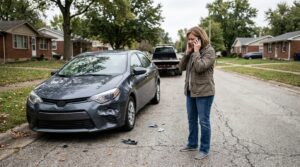 Missing one deadline rarely ends your injury claim. The consequences depend on which clock you missed.
What Each Missed Deadline Means
Here’s what’s typically at stake with each deadline:
- Leaving the scene: possible criminal charges, but your own injury claim against a negligent driver survives
- The 30-day DOR report: possible license consequences, and the Department still accepts late reports for up to a year
- Insurer notice: the insurer must generally show the delay hurt it before denying coverage
- The five-year lawsuit deadline: usually fatal to the claim, with few exceptions
The lawsuit deadline carries the hardest consequences. The other three leave more room to recover.
How Does Halvorsen Klote Davis Handle Missouri Car Accident Cases?
We take over the deadlines, the paperwork, and the insurance calls so you can focus on getting better. From the first call, we track every clock that applies to your crash and handle each one before it runs out.
What We Do for You
Every car accident case moves through the same core steps in our office:
- Confirm which reporting deadlines apply, including the 30-day Department of Revenue report
- Notify your insurer and the at-fault driver’s insurer in writing
- Request the police report, photos, and any available video
- Collect your medical records and track your lost wages
- Identify every policy that might pay, including your own uninsured and underinsured motorist coverage
FAQ for Missouri Car Accident Reporting Requirements
How long do you have to report a car accident in Missouri?
How long you have to report a car accident in Missouri depends on who you’re reporting to. You must share information at the scene immediately. The Department of Revenue report carries a 30-day deadline when an uninsured motorist is involved. Your insurer’s deadline comes from your policy.
Do I have to report a minor accident in Missouri?
You have to report a minor accident in Missouri to the other driver at the scene if it caused any damage to their property. A Department of Revenue report applies only when an uninsured driver was involved and damage exceeded $500 or someone was hurt.
What is the Missouri accident report deadline?
The Missouri accident report deadline is 30 days under RSMo 303.040 for crashes involving an uninsured motorist. That deadline applies to the written report filed with the Department of Revenue, not to police reports.
Does a police report count as my Department of Revenue report?
No, a police report does not count as your Department of Revenue report. A police crash report and Form 1140 are separate documents. If your crash involved an uninsured driver, you file Form 1140 yourself.
Do I need to report a crash to my insurer if it wasn’t my fault?
Yes, you need to report a crash to your insurer even if it wasn’t your fault. Your policy likely requires prompt notice for any crash. Early notice also protects your uninsured and underinsured motorist coverage.
Talk to a St. Louis Car Accident Lawyer About Your Deadlines
 Deadlines feel less stressful when someone else keeps track of them. Our St. Louis car accident lawyers help injury victims sort out which reports apply, handle insurer notice, and protect the five-year filing window. Contact Halvorsen Klote Davis to discuss your case.
Call 314-451-1314 to speak with a St. Louis car accident attorney about your options.