Is Missouri an At-Fault State for Motorcycle Accident Claims?
Yes, Missouri is an at-fault state, meaning the driver who caused a motorcycle accident is financially responsible for resulting injuries and property damage. If you were hurt in a motorcycle wreck in St. Louis or anywhere in Missouri, you can pursue compensation from the at-fault party or their insurer. Understanding Missouri’s fault-based system is essential for protecting your claim, especially when insurance companies try to shift blame onto riders. Missouri law includes specific protections for motorcyclists that many riders don’t know about, and understanding how at-fault law applies to your case can significantly impact your recovery.
If you were injured in a motorcycle crash and need guidance on your legal options, Halvorsen Klote Davis is here to help. Call (314) 451-1314 or reach out to our team today to discuss your claim.
How Missouri’s At-Fault System Applies to Motorcycle Crashes
Missouri’s at-fault insurance system requires the negligent party to pay for damages they cause in a traffic collision. This applies equally to motorcycle accidents, car crashes, and truck wrecks. When another driver runs a red light, makes an unsafe lane change, or fails to yield and strikes a motorcyclist, that driver bears financial responsibility for the resulting injuries and losses.
Filing a motorcycle accident claim in Missouri involves proving four elements: duty, breach, causation, and damages. Medical records, crash scene photos, witness statements, and crash reconstruction reports all play a role in building a strong case. Riders who document their injuries and preserve evidence early are in a stronger position when pursuing compensation.
💡 Pro Tip: Gather evidence immediately after a crash. Take photos of the scene, injuries, and vehicle damage from multiple angles. Even if you feel fine, seek medical attention the same day, delayed symptoms are common with motorcycle injuries.
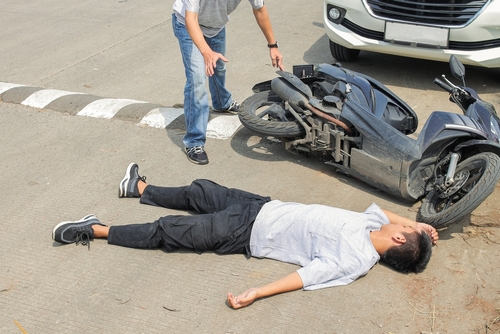
Missouri’s Comparative Fault Rules and What They Mean for Riders
Missouri follows a pure comparative fault framework under RSMo § 537.765. Any fault attributed to the plaintiff reduces the compensatory damages award proportionately but doesn’t bar recovery entirely. An injured motorcyclist can recover damages even if found partially at fault for the collision.
How Percentage of Fault Affects Your Compensation
If you’re found 30% at fault for a motorcycle crash and your total damages are $100,000, your recovery would be reduced to $70,000. Missouri’s system is more plaintiff-friendly than "modified comparative fault" states, where plaintiffs exceeding a certain fault threshold (often 50% or 51%) are completely barred from recovery. In Missouri, an injured rider can recover even if found up to 99% at fault, though the award is reduced accordingly.
Joint and Several Liability in Multi-Party Crashes
Motorcycle accidents sometimes involve multiple at-fault parties. Under RSMo § 537.067, a defendant found to bear 51% or more of the fault is jointly and severally liable for the full judgment amount. Defendants below that threshold are liable only for their proportionate share. This rule is critical for injured motorcyclists because it increases the likelihood of collecting full compensation when multiple defendants share liability.
💡 Pro Tip: If more than one party contributed to your crash, don’t assume you can only file against the driver who hit you. A thorough investigation may reveal additional liable parties, expanding your available recovery sources.
Legal Protections Specific to Missouri Motorcyclists
Missouri law includes targeted protections that prevent insurers from unfairly blaming motorcyclists simply for riding. Many riders face bias after a wreck, where adjusters imply the motorcyclist must share fault just for choosing to ride. Missouri’s legislature has directly addressed this problem.
Under RSMo § 379.130, no insurer, agent, producer, or claims adjuster may assign fault to a party based solely on the fact they were operating a motorcycle in an otherwise legal manner. This motorcyclist fault-protection statute took effect on August 28, 2009, and violations constitute an unfair trade practice subject to penalties under Missouri law.
Additionally, RSMo § 537.055 reinforces this by stating that operating a motorcycle shall not, in itself, be considered evidence of comparative negligence. These protections apply to insurance companies authorized to issue automobile insurance policies in Missouri covering private passenger automobiles owned by individuals or partnerships, including liability, uninsured motorist, medical payments, and physical damage coverage.
| Protection | Statute | What It Does |
|—|—|—|
| Anti-bias in fault assignment | RSMo § 379.130 | Prohibits insurers from assigning fault solely because a party was riding a motorcycle legally |
| Comparative negligence shield | RSMo § 537.055 | Prevents motorcycle operation alone from being used as evidence of negligence |
| Pure comparative fault | RSMo § 537.765 | Reduces but never eliminates a plaintiff’s right to recover based on their percentage of fault |
| Joint and several liability | RSMo § 537.067 | Holds defendants with 51%+ fault responsible for the full judgment |
💡 Pro Tip: If an adjuster suggests you share blame simply for riding a motorcycle, document that conversation. This conduct may violate Missouri law and could strengthen your position during negotiations or litigation.
Statute of Limitations for Filing a Motorcycle Injury Claim in Missouri
Missouri gives injured parties five years from the date of injury to file a personal injury lawsuit. This deadline is established under RSMo § 516.120, which covers actions for injury to person or property not arising from contract. The same five-year window applies to property damage claims.
While five years may seem generous, waiting too long carries real risks. Evidence deteriorates, witnesses move or forget details, and surveillance footage gets deleted. Courts interpret exceptions to statute of limitations deadlines, such as tolling or discovery rules, quite narrowly and should not be relied upon without careful legal analysis.
💡 Pro Tip: Even though you have five years, gathering evidence and consulting an attorney soon after a crash helps preserve critical proof. Insurance companies start building their defense immediately, you should too.
What to Do After a Motorcycle Accident in St. Louis
Taking the right steps after a motorcycle crash protects both your health and your legal claim. Here’s what injured riders should prioritize:
- Call 911 and obtain an official police report documenting the crash
- Seek immediate medical attention, even for injuries that seem minor
- Photograph the accident scene, all vehicles involved, road conditions, and your injuries
- Collect contact information and statements from witnesses
- Notify your insurance company of the accident, but avoid giving recorded statements before speaking with an attorney
- Keep detailed records of medical treatment, lost wages, and out-of-pocket expenses
Each step builds the foundation of a strong claim. Medical records linking your injuries to the crash establish causation, while photos and witness accounts help prove negligence. Learning how to get motorcycle accident compensation starts with preserving this evidence from day one.
Why You Need Motorcycle Accident Lawyers in St. Louis
Insurance companies have teams of adjusters and attorneys working to minimize payouts, and injured riders deserve the same level of representation. A St. Louis motorcycle accident lawyer with experience in Missouri negligence cases understands how to counter insurer bias, apply the correct statutes, and build a claim reflecting the full scope of your losses, including medical bills, future care needs, lost earning capacity, and pain and suffering.
Motorcycle crash cases often involve complex fact patterns. Distracted driving, failure to check blind spots, left-turn collisions, and road hazard issues are common causes of wrecks in the metro area. Working with motorcycle accident lawyers in St. Louis who understand these patterns can make the difference between a lowball settlement and full, fair compensation.
💡 Pro Tip: Be cautious about accepting early settlement offers. Initial offers rarely account for long-term medical treatment, rehabilitation costs, or the full impact of your injuries on your quality of life.
Frequently Asked Questions
1. Can I still recover damages if I was partially at fault for my motorcycle accident in Missouri?
Yes. Missouri’s pure comparative fault system under RSMo § 537.765 allows you to recover compensatory damages even if you share some fault. Your award is reduced by your percentage of responsibility, but recovery is not barred entirely regardless of your fault level.
2. How long do I have to file a motorcycle injury lawsuit in Missouri?
Missouri provides a five-year statute of limitations for personal injury claims under RSMo § 516.120, running from the date of the accident. However, certain narrow exceptions may affect the timeline, so consulting an attorney promptly is advisable.
3. Can an insurance company blame me just for riding a motorcycle?
No. Under RSMo § 379.130, insurers are prohibited from assigning fault solely because you were operating a motorcycle legally. Violating this rule constitutes an unfair trade practice under Missouri law.
4. What types of compensation can I pursue after a motorcycle wreck in Missouri?
Injured motorcyclists may seek economic damages (medical bills, lost wages, property damage) and non-economic damages (pain and suffering, loss of enjoyment of life). The specific amount depends on injury severity, evidence, and the degree of fault assigned to each party.
5. Does Missouri’s at-fault system apply to defective motorcycle equipment claims?
If defective equipment contributed to your injuries, you may have a claim against the manufacturer in addition to any at-fault driver. Missouri applies the same pure comparative fault standard to products liability claims under RSMo § 537.765: plaintiffs are not barred from recovery regardless of their percentage of fault, and any fault attributed to the plaintiff only proportionately reduces the compensatory damages award. An attorney can evaluate how these rules apply to your situation.
Protecting Your Rights After a Missouri Motorcycle Crash
Missouri’s at-fault system places the financial burden on the negligent party, and state law includes meaningful protections to prevent insurers from unfairly blaming motorcyclists. From pure comparative fault rules that preserve your right to recover damages to anti-bias statutes that hold insurers accountable, Missouri law provides injured riders with real tools to pursue fair compensation. Acting quickly, preserving evidence, and understanding your legal rights are the most important steps after a crash.
The team at Halvorsen Klote Davis is ready to fight for the compensation you deserve. Call (314) 451-1314 or contact us now to schedule a consultation about your motorcycle accident claim.