Understanding Financial Responsibility After a St. Louis Motorcycle Crash
Key Takeaways: After a Missouri motorcycle accident, the at-fault driver’s liability insurance is ultimately responsible for medical bills under the state’s fault-based system, but payment is rarely immediate. Your health insurance, medical payments coverage, or uninsured/underinsured motorist coverage often pay first while your attorney pursues full reimbursement. Missouri requires minimum 25/50/25 liability coverage and matching uninsured motorist coverage. Recovery depends on proving negligence and quantifiable damages. Missouri’s pure comparative fault rule reduces but does not eliminate an award if you share blame. Claims must generally be filed within five years under RSMo § 516.120, and strong documentation is essential to overcoming insurer pushback.
After a motorcycle crash in Missouri, the at-fault driver’s liability insurance is responsible for medical bills, but payment is rarely immediate. In practice, your health insurance, medical providers, and uninsured motorist coverage often pay first, while your attorney pursues full reimbursement from the negligent party. Missouri follows a fault-based system, meaning the person who caused the collision is ultimately liable for the harm they create.
If you are facing mounting bills and insurer pushback, the team at Halvorsen Klote Davis is ready to help. Call us at (314) 451-1314 or reach out through our secure contact page to discuss your situation.
Why Motorcycle Injury Costs Are So Severe
Motorcycle injuries tend to be catastrophic because riders lack the structural protection that surrounds occupants of passenger vehicles. This vulnerability drives the high medical expenses following a St. Louis motorcycle wreck.
According to the National Safety Council, motorcycles made up only 3% of all registered vehicles yet accounted for more than 16% of all traffic fatalities. The federal government reports that in 2024 there were over 6,000 motorcyclists killed, representing about 16% of all traffic deaths. These figures underscore why motorcycle injury medical costs in Missouri can climb into six figures quickly.
Most of these crashes happen under ordinary conditions. Safety data shows that the majority of fatal motorcycle crashes occur on urban roads and in good weather, with a significant share involving a second vehicle. This counters the common insurer narrative that riders are inherently reckless.
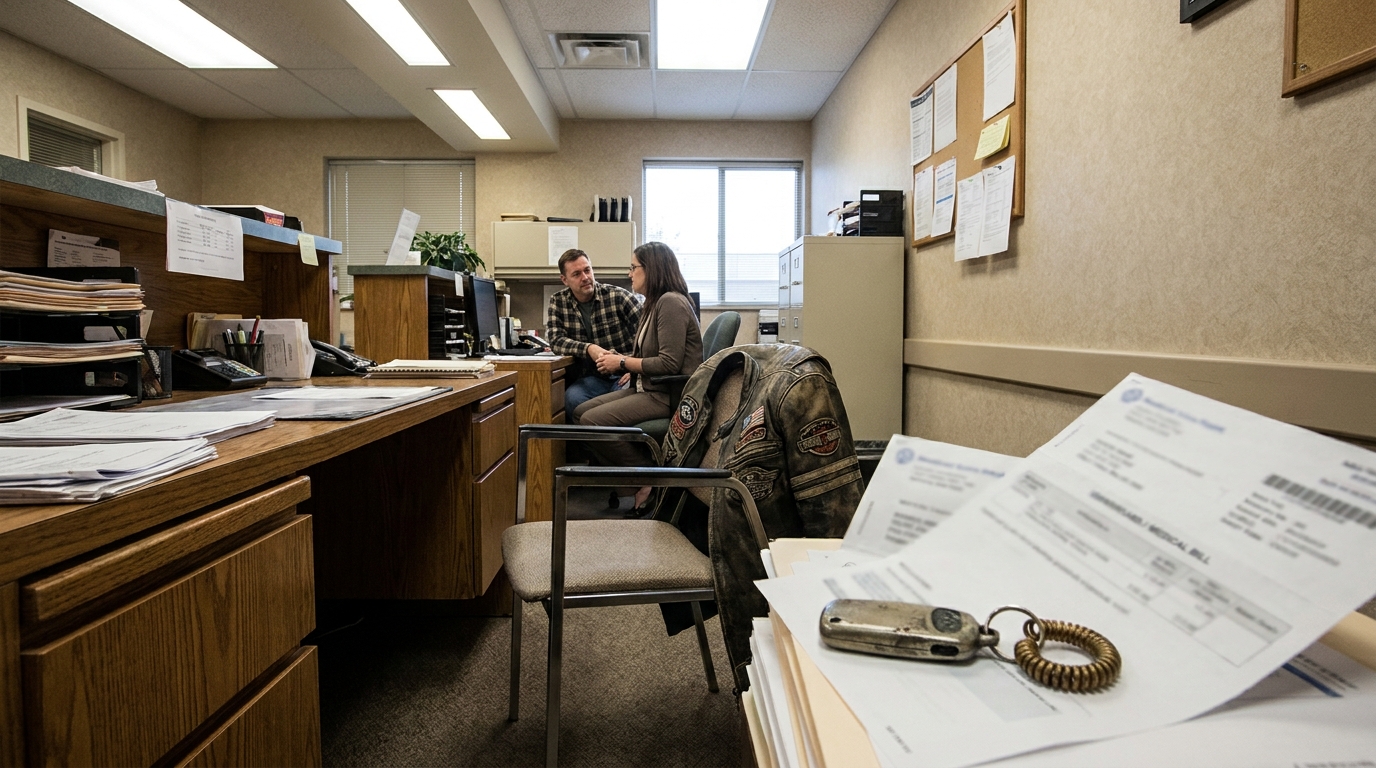
💡 Pro Tip: Keep every medical record, billing statement, and explanation of benefits in one organized file from day one. Comprehensive documentation is the foundation of proving motorcycle accident damages in Missouri.
Who Pays First: Insurance Layers After a Crash
After a collision, several insurance sources may cover your treatment before the at-fault party pays. Understanding this layered structure helps explain why you should not wait for the negligent driver’s insurer to act.
Missouri’s Department of Revenue sets the minimum insurance requirements at 25/50/25: $25,000 per person for bodily injury, $50,000 per accident for bodily injury, and $25,000 for property damage. Missouri also requires uninsured motorist coverage of $25,000 per person and $50,000 per accident. Underinsured motorist coverage is not mandated and applies only if you elected to purchase it.
Common sources that may pay toward your bills include:
- The at-fault driver’s liability insurance, which is the primary source for medical expenses
- Your uninsured or underinsured motorist coverage when the responsible driver lacks adequate insurance
- Your private health insurance, which often pays providers first and may later assert a lien or subrogation right
- Medical payments coverage, if you elected to add it to your policy
Health insurance involvement introduces an added wrinkle. When your health plan pays for treatment, it may seek repayment out of any settlement you recover. An experienced advocate can often negotiate these liens down, leaving more of your recovery in your pocket.
Proving Fault in a Motorcycle Accident Case
Recovering your medical bills hinges on establishing that another party’s negligence caused your injuries. A successful claim requires proof of four elements: duty of care, breach of that duty, causation, and quantifiable damages. Evidence transforms these legal elements into a compelling claim.
Strong evidence in a St. Louis motorcycle accident claim typically includes the police crash report, photographs of the scene and vehicles, medical records, witness statements, and accident reconstruction analysis. Because insurers often blame riders unfairly, building this record early can be decisive. For a fuller picture of what victims may recover, our overview of the compensation available to crash victims walks through the categories of damages Missouri law allows.
💡 Pro Tip: Request a copy of the official crash report and photograph your injuries throughout recovery. Visual documentation of healing over time can powerfully support a claim for non-economic damages.
How Missouri’s Comparative Fault Rule Affects Recovery
Missouri applies pure comparative fault, so your own share of responsibility reduces your award but does not eliminate it. This rule, adopted in Gustafson v. Benda, protects riders who may bear partial blame. The same principle is codified in Missouri’s comparative fault statute, RSMo § 537.765, which abolishes contributory fault as a complete bar to recovery.
This doctrine carries real weight in motorcycle cases. Insurers frequently argue that helmet choices or riding behavior contributed to injuries. Federal data (NHTSA NOPUS) noted that DOT-compliant helmet use was approximately 69% in 2020 and 73.8% in 2023 among motorcyclists nationally, representing an increase over that period and the highest rate ever recorded. Even so, partial fault does not close the door on compensation under Missouri’s framework.
Joint and several liability rules also shape how much each defendant must pay. Under RSMo § 537.067, if a defendant is found to bear 51% or more of fault, that defendant is jointly and severally liable for the full judgment. When a defendant falls below that threshold, they are severally liable only for their proportionate share. Punitive damages follow a stricter approach, with each defendant always being severally liable for their own percentage.
| Fault Scenario | General Liability Outcome |
|---|---|
| Defendant 51% or more at fault | Jointly and severally liable for full judgment |
| Defendant below 51% at fault | Severally liable for their share only |
| Plaintiff partially at fault | Award reduced proportionately, not barred |
| Punitive damages | Each defendant liable for own share only |
The Deadline to Pursue Motorcycle Accident Compensation in Missouri
Missouri law sets firm time limits for filing a personal injury lawsuit, and missing the deadline can permanently bar your claim. Under RSMo § 516.120, most personal injury actions, including those seeking compensation for medical bills after a motorcycle crash, must be brought within five years.
While five years may sound generous, waiting can weaken a case as evidence fades and memories blur. Certain tolling or discovery principles may extend a deadline in limited circumstances, but Missouri courts interpret these exceptions narrowly. The civil statute of limitations is also distinct from any administrative process.
💡 Pro Tip: Treat the statute of limitations as a final boundary, not a target. Consulting a motorcycle injury attorney in St. Louis early preserves evidence and protects your filing rights.
When the At-Fault Driver Cannot or Will Not Pay
Even a clear liability case can stall when the responsible driver has no insurance or refuses to pay. This is where uninsured motorist coverage becomes critical. If an at-fault driver fails to pay for accident damages, Missouri may suspend their driver license and license plates for one year.
That enforcement mechanism does not directly pay your bills, but your own coverage and a well-documented claim often become the practical route to recovery. Working with a dedicated motorcycle injury attorney in St. Louis can help you identify every available source of payment and pursue them effectively.
Building a Strong Motorcycle Accident Case Step by Step
Protecting your right to recover medical costs begins with deliberate action after the crash. A well-prepared case combines prompt medical care, thorough documentation, and timely legal guidance.
Consider these practical measures after a collision:
- Seek medical evaluation immediately, even if injuries seem minor
- Report the crash and obtain the official report number
- Preserve gear, the motorcycle, and damaged equipment
- Avoid recorded statements to the other driver’s insurer before consulting counsel
Frequently Asked Questions
1. Does my health insurance have to pay my motorcycle crash bills?
Your health insurance generally pays for covered treatment regardless of who caused the crash. However, your plan may later assert a subrogation or lien claim against any settlement you recover.
2. What if the driver who hit me had no insurance?
Missouri requires uninsured motorist coverage, which may pay your bills when the at-fault driver carries none. Your policy generally provides at least $25,000 per person and $50,000 per accident.
3. Can I still recover if I was partly at fault?
Yes, Missouri’s pure comparative fault rule allows recovery even when you share some blame. Your compensation is reduced by your percentage of fault rather than eliminated.
4. How long do I have to file a claim in Missouri?
Under RSMo § 516.120, you generally have five years to file a personal injury lawsuit. Exceptions are interpreted narrowly and should not be assumed to apply.
5. Will wearing or not wearing a helmet affect my claim?
Helmet use can become part of a comparative fault argument. Even so, it does not automatically bar recovery, and the outcome depends on the specific facts.
Moving Forward After a Motorcycle Injury
Determining who pays after a motorcycle crash in St. Louis depends on insurance coverage, fault allocation, and the strength of your evidence. Between the at-fault driver’s liability policy, your uninsured motorist coverage, and your health plan, several sources may contribute to your bills, but recovering full compensation often requires persistence and skilled advocacy. Missouri’s comparative fault and liability statutes give injured riders meaningful rights, and acting within the five-year deadline preserves those rights.
If you are facing motorcycle accident medical bills in Missouri and need clear answers, the attorneys at Halvorsen Klote Davis are prepared to stand up for you. Call (314) 451-1314 or visit our online contact form to take the first step toward protecting your recovery.