Missouri’s Hands-Free Law Takes Full Effect: Critical Changes for Motorcyclists
As of January 1, 2025, Missouri’s hands-free driving law has moved from warning phase to full enforcement, fundamentally changing how all motorists—including motorcyclists—can interact with electronic devices on the road. The Siddens Bening Hands Free Law, which took effect August 28, 2023, initially gave drivers a grace period where officers could only issue warnings. That grace period has now ended, and riders face real penalties for violations. This shift comes at a critical time when motorcycle fatalities in Missouri reached a record 175 deaths in 2023, marking the highest number ever recorded in the state. The law prohibits physically holding or supporting electronic communication devices while operating any motor vehicle on Missouri highways or public property, creating new responsibilities for both riders and other motorists sharing the road.
💡 Pro Tip: Even though you’re wearing gloves while riding, touching your phone for any reason while your motorcycle is in motion violates the law. Pull over safely and come to a complete stop before checking messages or adjusting navigation.
Concerned about the new hands-free law and its implications? Halvorsen Klote Davis stands ready to assist you in navigating these legal waters. If you have questions or need immediate help, give us a ring at (314) 451-1314 or contact us today. Don’t face these challenges alone—let us lend a hand.
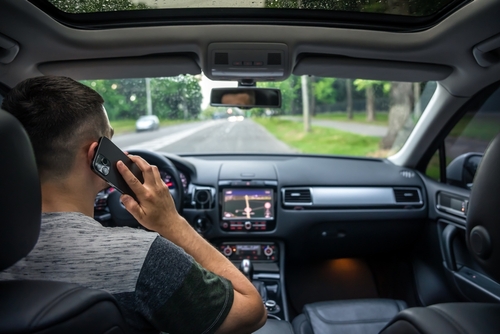
Understanding Your Rights Under the Missouri Hands-Free Driving Law
The Siddens Bening Hands Free Law establishes clear boundaries for electronic device use while operating vehicles in Missouri. Riders cannot physically hold or support a phone with any part of their body, write or read text messages, or make phone calls without hands-free or voice-operated features. These restrictions apply equally to motorcyclists and car drivers, though the practical implications differ significantly for those on two wheels. When working with motorcycle accident lawyers in St. Louis, understanding these legal distinctions becomes crucial, especially if you’re involved in a crash where distracted driving played a role.
The law includes several important exceptions that riders should know. You can still use your device for navigation purposes, listen to audio broadcasts or digital recordings, and make emergency calls to report illegal activity or summon medical help. Permanently affixed commercial devices and transit or for-hire vehicle functions also receive exemptions. Most importantly, if law enforcement stops you for a suspected violation, they must inform you of your right to decline a search of your device. No warrant can be issued to access your phone based solely on a hands-free violation unless the violation results in serious injury or death.
💡 Pro Tip: Document any traffic stop where hands-free violations are suspected. If an officer doesn’t inform you of your right to decline a device search, this procedural error could impact any resulting charges or citations.
From Warning to Enforcement: The Law’s Implementation Timeline
Understanding the timeline of Missouri’s hands-free law helps riders grasp why enforcement has suddenly intensified. The implementation followed a deliberate schedule designed to give motorists time to adapt to the new requirements while building awareness about the dangers of distracted driving—dangers that resulted in more than 100 deaths in Missouri during 2023 alone.
- August 28, 2023: The Siddens Bening Hands Free Law officially took effect, but with a critical provision—officers could only issue warnings for violations involving noncommercial vehicles
- August 2023 – December 2024: During this 16-month warning period, law enforcement focused on education rather than punishment, helping drivers understand the new restrictions
- January 1, 2025: Full enforcement began, meaning officers can now issue citations with fines ranging from $150 for first offenses to $500 for repeat violations or infractions in work/school zones
- Ongoing: Enhanced penalties apply immediately for violations causing property damage exceeding $5,000 (class D misdemeanor), serious injury (class B misdemeanor), or death (class D felony)
💡 Pro Tip: The warning period has ended, but many insurance companies still offer defensive driving courses that cover hands-free compliance. Completing one could lower your premiums while helping you avoid costly violations.
Protecting Yourself: Working with Motorcycle Accident Lawyers in St. Louis
When distracted driving leads to a motorcycle accident, the consequences extend far beyond traffic tickets. With 41% of single-vehicle motorcycle fatalities in 2023 involving alcohol impairment and 34% of fatal crash operators riding without valid licenses, the addition of electronic device distractions creates a perfect storm of danger. Riders injured by distracted drivers need experienced legal representation who understand both the hands-free law and the unique vulnerabilities motorcyclists face. Halvorsen Klote Davis brings extensive experience handling complex motorcycle accident cases where electronic device use contributed to the crash, helping victims document violations and pursue full compensation for their injuries.
The firm’s approach recognizes that proving hands-free violations requires specific evidence and legal knowledge. Phone records, witness statements, and accident reconstruction often play crucial roles in establishing that a driver violated the law at the time of impact. Missouri roadway fatalities 2023 data shows that aggressive driving behaviors contributed to more than half of all traffic deaths, and when combined with device distractions, the risk multiplies exponentially for motorcyclists who lack the protective shell of a car.
💡 Pro Tip: After any accident, photograph the other driver’s vehicle interior if safely possible. Phones mounted on dashboards, charging cables, or devices visible on seats can provide crucial evidence of potential hands-free violations.
Real-World Impact: How Device Restrictions Affect Different Types of Riders
The hands-free law affects various motorcycle riders differently based on their riding style, equipment, and typical routes. Touring riders with integrated Bluetooth systems face fewer challenges adapting to the restrictions than sport bike riders who rely on handlebar-mounted phones for navigation. Delivery riders and those using motorcycles for commercial purposes must balance productivity demands with legal compliance, often requiring investment in voice-activated technology. Understanding these distinctions helps riders make informed decisions about equipment upgrades and riding habits that keep them both legal and safe.
Technology Solutions for Safe, Legal Riding
Modern motorcycle communication systems offer hands-free solutions that comply with Missouri law while enhancing the riding experience. Helmet-integrated Bluetooth systems allow voice-activated calls, turn-by-turn navigation audio, and music streaming without touching any device. Some systems even enable rider-to-rider communication for group rides. While these technologies require upfront investment, they pay dividends in both safety and legal compliance. Riders should also consider that even with hands-free technology, cognitive distraction remains a risk—the safest choice often remains pulling over for complex communications.
💡 Pro Tip: Test any hands-free system extensively in a parking lot before relying on it in traffic. Voice commands that work perfectly at home might fail with wind noise at highway speeds, potentially tempting you to reach for your phone illegally.
Enforcement Challenges and Rider Advocacy
Enforcing hands-free laws for motorcyclists presents unique challenges that differ from four-wheeled vehicles. Officers must distinguish between legal helmet-mounted communication devices and illegal phone handling, often while observing from a distance or through traffic. This enforcement complexity creates situations where riders might face citations despite complying with the law. Motorcycle accident lawyers in St. Louis report an increase in contested citations where riders used legal hands-free devices but faced wrongful stops. Understanding these enforcement nuances helps riders protect their rights during traffic stops and builds stronger defenses against improper citations.
Building Your Defense Against Wrongful Citations
When facing a hands-free violation citation, riders have specific defenses available under Missouri law. The statute’s exceptions for navigation and audio listening create gray areas that skilled attorneys can navigate. Documentation becomes crucial—keeping receipts for hands-free equipment, maintaining phone logs showing no active use during the cited timeframe, and securing witness statements from fellow riders all strengthen your position. Given that penalties escalate rapidly from $150 to $500 for repeat violations, fighting wrongful citations protects both your wallet and your riding privileges. Some riders have successfully challenged citations by demonstrating their devices were securely mounted and operated entirely through voice commands, meeting the law’s hands-free requirements.
💡 Pro Tip: Install dash cam systems on your motorcycle that record both forward views and audio. This footage can prove you weren’t touching devices during alleged violation times and captures any procedural errors during traffic stops.
Frequently Asked Questions
Common Concerns About Missouri’s Hands-Free Law for Riders
As enforcement of the hands-free law intensifies, riders across Missouri face new questions about compliance, penalties, and their rights on the road. These concerns multiply when accidents occur, especially given the record-high motorcycle fatalities the state experienced in 2023.
💡 Pro Tip: Keep a printed card in your wallet listing the specific statute (Section 304.822) and your rights during traffic stops. This preparation helps you stay calm and informed during stressful encounters with law enforcement.
Understanding Your Legal Options After an Accident
When distracted driving causes a motorcycle crash, victims need clear guidance on protecting their rights and pursuing compensation. The intersection of hands-free violations and accident liability creates complex legal situations requiring experienced representation.
💡 Pro Tip: Start documenting your case immediately after any accident. Even from a hospital bed, you can ask family members to preserve evidence and contact witnesses before memories fade or evidence disappears.
1. Can motorcycle accident lawyers in St. Louis help if the other driver claims they were using hands-free features during the crash?
Yes, experienced attorneys know how to investigate these claims thoroughly. They can subpoena phone records, analyze device data, and work with accident reconstruction specialists to determine if hands-free claims are legitimate. Even legal hands-free use doesn’t absolve drivers of liability if the distraction contributed to the accident.
2. What happens if I receive a hands-free violation citation while riding through St. Louis, but I was using voice commands?
You have the right to contest the citation in court. Missouri’s law specifically permits voice-operated features, so demonstrating proper use of this technology provides a valid defense. Document your equipment setup and consider requesting dash cam or body cam footage from the traffic stop.
3. How do the enhanced penalties for hands-free violations work in motorcycle accident cases?
If a hands-free violation causes property damage exceeding $5,000, it becomes a class D misdemeanor. Violations causing serious physical injury escalate to class B misdemeanors, while those resulting in death are class D felonies. These criminal charges exist separately from civil liability in personal injury lawsuits.
4. Does Missouri’s hands-free law apply differently to out-of-state riders passing through?
No, the law applies equally to all motorists operating vehicles on Missouri highways and public property, regardless of their home state. The law also preempts local regulations, meaning riders face consistent rules throughout Missouri rather than varying municipal ordinances.
5. What evidence do motorcycle accident lawyers in St. Louis typically need to prove a hands-free violation contributed to my crash?
Attorneys typically gather phone records, witness statements, surveillance footage, police reports, and vehicle data recorder information. They might also work with forensic specialists who can analyze phone usage patterns and correlate them with the accident timeline. Starting this evidence collection quickly improves your case’s chances significantly.
Work with a Trusted Motorcycle Accident Lawyer
The implementation of Missouri’s hands-free law adds new complexity to motorcycle accident cases, requiring legal representation that understands both traditional accident law and these evolving electronic device regulations. Riders injured by distracted drivers deserve attorneys who can navigate these intersecting legal areas while fighting for full compensation. Whether you’re dealing with a wrongful hands-free citation or pursuing a claim against a distracted driver who caused your injuries, having knowledgeable legal guidance makes the difference between accepting inadequate settlements and securing the compensation needed for recovery. The record-high motorcycle fatalities in 2023 underscore the critical importance of holding negligent drivers accountable, especially when preventable distractions contribute to these tragic outcomes.
Ready to ride safely and confidently under Missouri’s hands-free law? Halvorsen Klote Davis is your go-to team for addressing any legal concerns you might have. Reach out today at (314) 451-1314 or contact us—we’re here to help you steer clear of trouble and stay on the right side of the law.