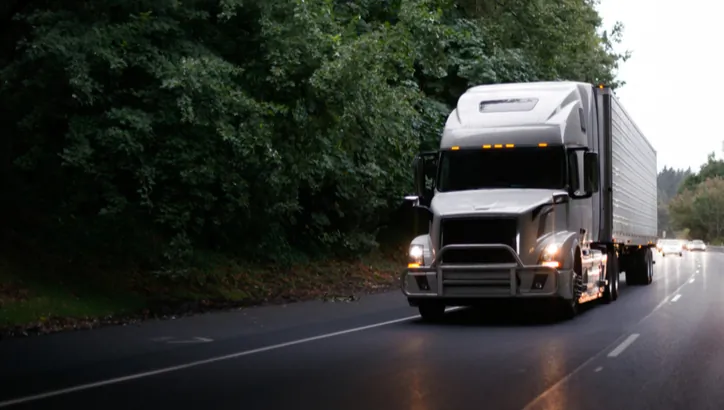
 More than one party may share responsibility for a truck accident, since a single truck involves separate companies for ownership, dispatch, maintenance, and cargo loading. Sorting out who actually caused the crash means looking past the driver to the business relationships behind the truck.
- The truck driver, if speeding, fatigue, or a hours-of-service violation contributed to the crash.
- The trucking company, if negligent hiring, inadequate training, or pressure to violate hours-of-service rules played a role.
- A maintenance contractor, if poor brake or tire maintenance contributed to the crash.
- A cargo loading company, if an improperly secured or overloaded trailer caused the truck to become unstable.
- A parts manufacturer, if a defective brake system or tire failure caused or worsened the crash.
When more than one of these parties shares fault above 51 percent, Missouri’s joint and several liability rule under RSMo § 537.067 may hold that party responsible for the full judgment, not just its own share.
What happens if the driver is an independent contractor?
Many truck drivers work as independent contractors rather than direct employees, which sometimes leads trucking companies to argue they aren’t responsible for a driver’s conduct. Federal regulations close that gap.
A motor carrier operating under its own federal authority is generally treated as responsible for a leased driver’s negligence while that driver is hauling the carrier’s freight, regardless of the contractor label on paper. This distinction gets argued enough in truck accident cases that it’s worth raising early, rather than accepting a trucking company’s initial claim that the driver “wasn’t really theirs.”
Federal Regulations That Come Up in a Truck Crash Investigation
Federal trucking regulations set rules for driver hours, vehicle maintenance, and driver qualification that don’t apply to ordinary passenger vehicles, and a violation of them may support a negligence claim.
The table below covers the regulations that come up most frequently in a truck accident investigation.
| Regulation | What It Requires | Why It Matters After a Crash |
| Hours of service, 49 CFR § 395.3 | Limits on daily and weekly driving time | Fatigue-related crashes often trace back to a logged hours-of-service violation |
| Electronic logging devices | Automated tracking of a driver’s hours behind the wheel | Replaces older paper logs that were easier to falsify |
| Financial responsibility, 49 CFR § 387.9 | Minimum liability insurance based on cargo type | Confirms how much coverage is actually available to a claim |
| Driver qualification files | Background checks, medical certification, and road test records | May reveal a company hired or retained an unqualified driver |
| Drug and alcohol testing, 49 CFR Part 382 | Pre-employment, random, and post-crash testing for commercial drivers | A positive post-crash test result can shift blame directly onto the driver |
| Cargo securement rules | Standards for how freight gets loaded and secured | A shifting or falling load can point to a loading company’s negligence |
| Rear impact guards, 49 CFR § 393.86 | Rear guards on trailers to reduce underride injuries | A missing or damaged guard may point to a maintenance failure |
 Evidence in a truck accident case tends to disappear faster than in a typical car accident claim, since trucking companies aren’t required to hold onto every record indefinitely. Driver logs, dispatch records, and black box data from the truck’s engine control module may be overwritten or deleted well before a claim gets resolved.
A written preservation letter sent to the trucking company early in a claim puts the company on notice not to destroy this evidence, which matters because some records get overwritten automatically as part of normal operations rather than through any deliberate act. Evidence worth securing quickly typically includes:
- Electronic control module data showing the truck’s speed, braking, and engine performance before the crash.
- Driver logs and electronic logging device records covering the days leading up to the crash.
- Dashcam footage, if the truck or a nearby vehicle was equipped with one.
- Maintenance and inspection records for the specific truck involved.
Once secured, this evidence becomes part of the permanent record for the case regardless of how long negotiation or litigation ultimately takes.
Are Underride and Rollover Crashes Separate?
Underride and rollover crashes involve specific federal safety standards that a standard rear-end or intersection collision doesn’t raise.
An underride crash happens when a smaller vehicle slides underneath the back or side of a trailer, and federal law under 49 CFR § 393.86 requires rear impact guards on most trailers to reduce the severity of these collisions.
Rollover crashes raise different questions, usually centered on cargo weight distribution, driver speed for road conditions, or a trailer’s load balance. A trailer that wasn’t loaded evenly, or a driver who took a curve too fast for a top-heavy load, may point to either the loading company or the driver as the source of the crash.
Both crash types produce more severe injuries than a standard collision, which is part of why the underlying cause gets scrutinized closely.
 Most Missouri truck accident claims must be filed within five years of the crash, the same deadline that applies to car accident claims under RSMo § 516.120.
A truck accident that results in death shifts to a separate three-year deadline under RSMo § 537.100, running from the date of death rather than the date of the crash.
Comparative fault still applies in truck accident cases the same way it does in standard car accident claims.
Missouri’s pure comparative fault rule under RSMo § 537.765 means a driver found partly at fault for a truck accident may still recover compensation, reduced by their share of fault, which can affect the compensation victims recover in a truck accident.
What Is a St. Louis Truck Accident Claim Worth?
Compensation after a truck accident depends on the severity of the injury and the total insurance coverage available across every liable party, which is often higher than in a standard car accident claim. Truck accident injuries also tend to be more severe given the size and weight difference between a commercial truck and a passenger vehicle.
- Medical expenses, including emergency care, surgery, and long-term rehabilitation.
- Lost wages and reduced earning capacity for injuries that affect long-term work ability.
- Property damage covering vehicle repair or total loss.
- Pain and suffering tied to the physical and daily impact of a serious injury.
- Wrongful death damages, including funeral costs and loss of household support, in fatal crashes.
Because multiple insurance policies may respond to a single truck accident claim, from the motor carrier’s primary policy to a separate maintenance contractor’s coverage, the total value available often exceeds what a single passenger vehicle policy could provide.
Talk to a St. Louis Truck Accident Lawyer at Halvorsen Klote Davis About Your Case
 Trucking companies aren’t required to hold onto driver logs or black box data unless someone tells them not to delete it. That request needs to go out before the insurance adjuster calls you, not after.
Halvorsen Klote Davis handles truck accident cases across St. Louis, eastern Missouri, and the Illinois Metro East.
Call 314-451-1314 and tell us what happened.