When a Rideshare Driver’s Insurance Lapses in Missouri, Who Pays?
If an Uber or Lyft driver’s personal auto insurance lapses, the “who pays” question depends on what the driver was doing in the app at the moment of the crash. In St. Louis, that timing determines whether you’re dealing with a personal auto insurer, a rideshare company’s Transportation Network Company (TNC) policy, or both. Missouri statute addresses these trip “periods” and lapsed coverage scenarios.
If you were hurt in a St. Louis rideshare collision and are getting the runaround about coverage, Halvorsen Klote Davis can help you sort out the insurance layers and protect your claim. Call (314) 451-1314 or contact us now to discuss next steps.
The Key Issue Is Timing: App Off, Waiting, En Route, or On a Trip
Rideshare coverage disputes turn into timeline fights about which “period” applied at impact. Insurers demand app screenshots, trip IDs, and incident reports because limits and primary coverage change when a driver goes from offline to waiting, to en route, to carrying a passenger.
Missouri’s statute uses two critical concepts: “logged on” and “prearranged ride.” These statuses trigger different minimum insurance requirements.
Pro Tip: Ask for the driver’s status in writing. Request written confirmation from the TNC whether the driver was (1) logged on and available or (2) engaged in a prearranged ride.
Missouri’s Minimum Rideshare Insurance Requirements (And Why Lapses Matter)
Missouri law sets minimum coverage amounts while a driver is logged on and available, and higher amounts during a prearranged ride. The requirements in RSMo § 379.1702 prevent a coverage vacuum during app-based driving. (See Missouri’s rideshare insurance statute.)
When logged in but not on a trip, Missouri requires at least $50,000 per person, $100,000 per incident, and $25,000 for property damage, plus uninsured motorist coverage. RSMo § 379.1702.2(1) requires: “Primary automobile liability insurance in the amount of at least fifty thousand dollars for death and bodily injury per person, one hundred thousand dollars for death and bodily injury per incident, and twenty-five thousand dollars for property damage.”
Once the driver is in a prearranged ride, Missouri raises the minimum to $1,000,000. RSMo § 379.1702.3(1) requires: “Primary automobile liability insurance in the amount of at least one million dollars for death, bodily injury, and property damage.”
Missouri allows these minimums to be met by the driver, the TNC, or a combination, which is where “gap” arguments start. RSMo § 379.1702.2(3) permits coverage through automobile insurance maintained by the driver, the TNC, or any combination.
What If the Driver’s Insurance Actually Lapsed? Missouri’s “First Dollar” Rule
A lapse can be used by insurers to deny coverage and force a fight about which policy must respond. Missouri’s statute directly addresses lapsed or insufficient driver coverage.
Missouri’s statute says the TNC’s insurance must step in from the first dollar if the driver’s required coverage has lapsed or is inadequate. RSMo § 379.1702.4 provides: “If insurance maintained by a driver in subsection 2 or 3 of this section has lapsed or does not provide the required coverage, insurance maintained by a transportation network company shall provide the coverage required by this section beginning with the first dollar of a claim and shall have the duty to defend such claim.”
That “duty to defend” language matters because it affects who must provide legal defense and how settlement negotiations unfold.
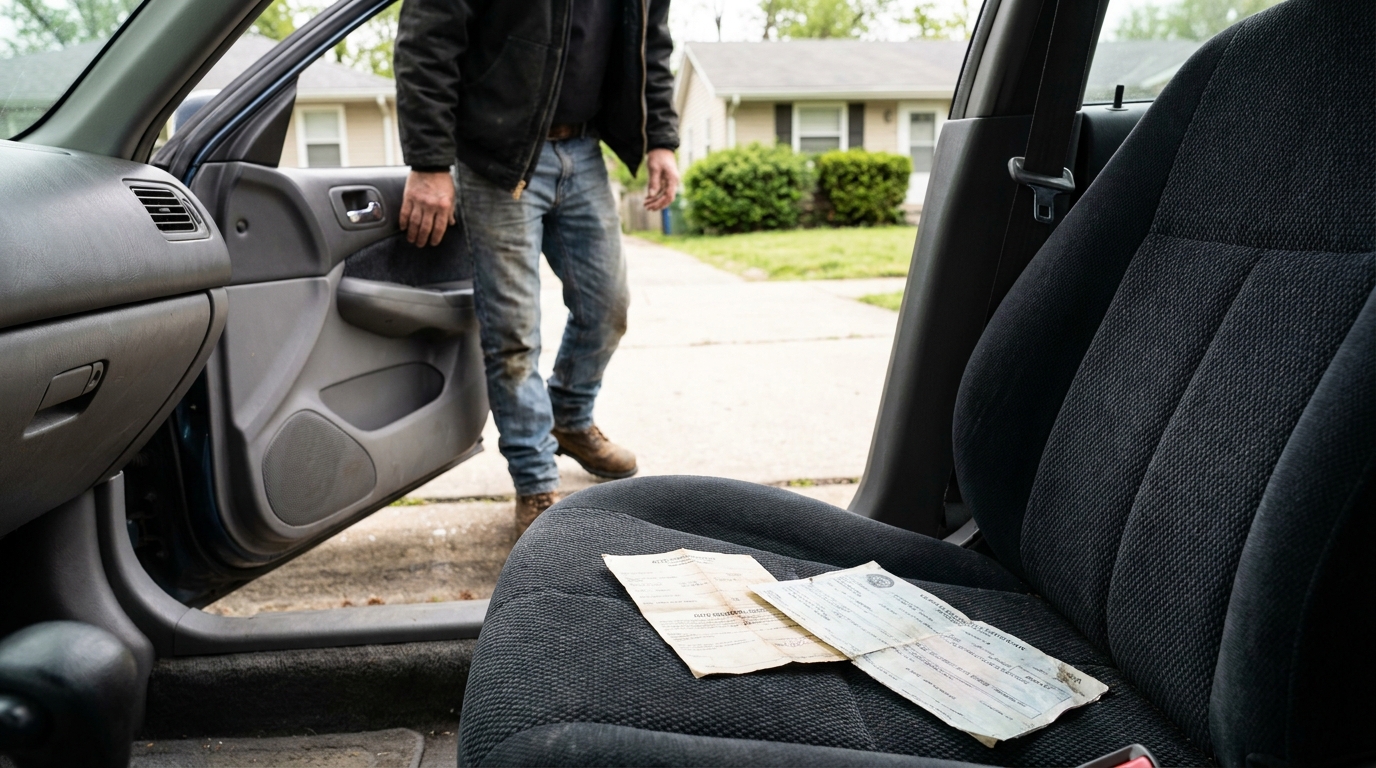
Pro Tip: Preserve evidence before it disappears. Save trip screenshots, receipts, driver details, and messages, and photograph vehicles and plates if safe.
The Four Practical “Periods” After a St. Louis Rideshare Crash
Insurers and rideshare companies describe coverage in four periods. Missouri’s statute doesn’t label them “Period 0, 1, 2, 3,” but these labels are commonly used in claims.
| App/Trip Status (Practical) | What it Usually Means | Typical Liability Limits |
|---|---|---|
| Period 0: App off | Driver is not available for rides | Company coverage does not apply; driver’s personal policy controls |
| Period 1: App on, waiting | Driver is logged on and available but has not accepted a trip | $50K/$100K/$25K; Missouri minimums also require UM |
| Period 2: En route to pick up | Driver accepted a trip and is driving to the passenger | $1,000,000 third-party liability |
| Period 3: Passenger in car | Driver is transporting passenger | $1,000,000 third-party liability |
The big lapse problem is that a driver with a lapsed personal policy may have no coverage in Period 0 and could trigger a coverage fight in Period 1. Once in a prearranged ride, Missouri requires $1,000,000 primary coverage, and the lapse provision prevents complete collapse of required coverage.
What “Prearranged Ride” Means for Injured Passengers and Third Parties
If hurt while the driver was en route to pick you up or actively transporting you, the $1,000,000 minimum is the starting point. Under RSMo § 379.1702.3(1), the “prearranged ride” period triggers the $1,000,000 primary automobile liability insurance requirement.
Uber and Lyft describe their company-provided coverage for Periods 2 and 3 as $1,000,000 in third-party auto liability. This is consistent with the statute’s requirement.
Pro Tip: Don’t assume app status is obvious. Drivers can toggle availability quickly, and insurers sometimes dispute whether a trip was accepted or canceled seconds before impact.
Period 1 in Missouri: The Common Gap Scenario
Many St. Louis rideshare crashes happen when a driver is logged in hunting for rides. In that window, Uber and Lyft provide liability coverage at $50,000 per person, $100,000 per accident, and $25,000 for property damage. Missouri’s statute describes this required coverage as “primary.”
If the driver’s insurance lapsed during this period, Missouri’s “first dollar” rule may force the TNC’s policy to step in. RSMo § 379.1702.4 states that if the driver’s insurance “has lapsed or does not provide the required coverage,” TNC insurance “shall provide the coverage required by this section beginning with the first dollar of a claim.”
Collision Coverage and the $2,500 Deductible
Some rideshare drivers have contingent collision and comprehensive coverage, but it often comes with a high deductible. If the driver carries collision and comprehensive on the personal policy, Uber or Lyft contingent collision coverage commonly has a $2,500 deductible.
This affects injured victims because it impacts settlement pressure and the driver’s incentives after the crash.
Proof of Coverage: What Missouri Requires Drivers to Carry
Missouri law requires TNC drivers to carry proof of coverage and disclose their status after a crash. RSMo § 379.1702.8 states drivers must carry proof of coverage at all times during use of a vehicle in connection with a TNC’s digital network. After an accident, drivers must provide coverage information and disclose whether they were logged on or on a prearranged ride.
If hit by a rideshare driver, that disclosure can be an early turning point. If the driver refuses or cannot produce proof, preserve your own evidence and pursue confirmation through insurers and the TNC’s reporting process.
How Long Do You Have to File? Missouri’s Five-Year Rule
Many Missouri rideshare accident claims fall under the civil statute of limitations, five years for many negligence-based injury cases. For many Missouri actions “not arising on contract,” RSMo § 516.120(4) provides a five-year period for “any other injury to the person or rights of another, not arising on contract.”
Contract-based disputes can also fall under a five-year period. RSMo § 516.120(1) covers “All actions upon contracts, obligations or liabilities, express or implied.”
The safest approach is to treat the deadline as firm and act promptly to preserve evidence and evaluate all potentially responsible parties.
Why Missouri’s Statewide Rideshare Rules Matter in St. Louis
Statewide regulation means coverage rules are standardized across Missouri, including St. Louis. In April 2017, Missouri’s House passed HB 130 establishing statewide regulations for ride-hailing companies. (Missouri-wide regulations for Uber, Lyft)
You can analyze a lapsed policy situation using the same statutory framework whether the crash happened downtown, in the county, or near the airport. Insurers can still dispute app status, policy lapse dates, and who was “primary.”
For more guidance, review our resource center at rideshare accident claim updates.
How Rideshare Accident Attorneys in St. Louis Build a Strong Lapsed-Insurance Case
When a rideshare driver’s insurance lapses, strong claims require proof that pins down fault, app status, and insurance responsibility. That means collecting the crash report, identifying witnesses and camera footage, preserving trip records, and pursuing the correct insurance layers.
RSMo § 379.1702.4 is often central because it addresses lapsed coverage and places responsibility on the TNC’s insurance “beginning with the first dollar” with a “duty to defend.”
Read more about our approach on our rideshare accident attorneys in St. Louis lawyer page.
Frequently Asked Questions
What happens if my Uber or Lyft driver’s personal insurance is canceled in Missouri?
If the driver’s insurance “has lapsed or does not provide the required coverage,” Missouri law states the TNC’s insurance must provide required coverage from the first dollar and has a duty to defend. RSMo § 379.1702.4 mandates this.
Does Missouri require $1 million coverage during a rideshare trip?
Yes, while engaged in a prearranged ride, Missouri requires primary liability coverage of at least $1,000,000, plus uninsured motorist coverage. RSMo § 379.1702.3(1) sets this requirement.
What coverage applies if the driver is logged in but has not accepted a ride yet?
Missouri sets minimums for the logged-on, available period: $50,000 per person, $100,000 per incident, and $25,000 for property damage, plus uninsured motorist coverage. RSMo § 379.1702.2(1) requires primary automobile liability insurance at those limits.
How long do I have to file a lawsuit after a rideshare crash in Missouri?
Many personal injury claims fall under a five-year limitations period in Missouri. RSMo § 516.120(4) provides five years for most injury claims not arising on contract.
What should I do right after a St. Louis rideshare crash if I suspect an insurance lapse?
Prioritize medical care and preserve proof of app status and coverage. RSMo § 379.1702.8 requires the driver to carry proof of coverage and, after an accident, provide coverage information and disclose whether they were logged on or on a prearranged ride. Gather trip screenshots, driver details, photos, and witness information.
Putting It All Together: A Lapse Does Not Automatically End Coverage
A rideshare driver’s lapsed insurance can create confusion and denials, but Missouri’s statute is designed to keep required coverage in place during app activity and prearranged rides. The challenge is proving app status, identifying which insurer must respond, and documenting damages thoroughly.
If you were injured in a St. Louis Uber or Lyft crash and are dealing with a lapsed insurance dispute, Halvorsen Klote Davis can help you pursue available coverage and build the strongest claim. Call (314) 451-1314 or contact us now to discuss your situation.