Understanding Who Foots the Bill After a Missouri Truck Crash
Key Takeaways: In Missouri, truck accident settlements are typically paid by at-fault parties and their insurers, including the truck driver, trucking company, maintenance contractor, cargo loader, or parts manufacturer. Identifying every responsible party expands available insurance coverage. Trucking company liability often hinges on the driver-carrier relationship and the carrier’s own conduct. Missouri’s pure comparative fault system allows recovery even if partially at fault, though your share reduces your award. A defendant found fifty-one percent or more at fault can be held jointly and severally liable for the entire compensatory judgment, while punitive damages are allocated by each defendant’s share. Insurance disputes, such as employee-exclusion clauses and uninsured/underinsured motorist provisions, often determine who actually pays. Missouri’s five-year personal injury filing period still applies, as House Bill 68 did not become law, making early action and evidence preservation essential.
When a commercial truck causes a serious collision, settlement money usually comes from insurance policies tied to the at-fault parties. In Missouri, a truck accident settlement may be paid by the truck driver, the trucking company, a maintenance contractor, a cargo loader, or their insurers. Determining who pays depends on legal responsibility, fault allocation, and applicable policies. For injured victims in the St. Louis area, understanding this framework early can make the difference between fair recovery and a frustrating insurer fight.
If you or a loved one was hurt in a crash with a big rig, the team at Halvorsen Klote Davis is ready to help. Call us at (314) 451-1314 or reach out through our online contact page to discuss your situation. Acting quickly preserves the evidence that determines who pays.
Identifying the Parties Who May Owe You Compensation
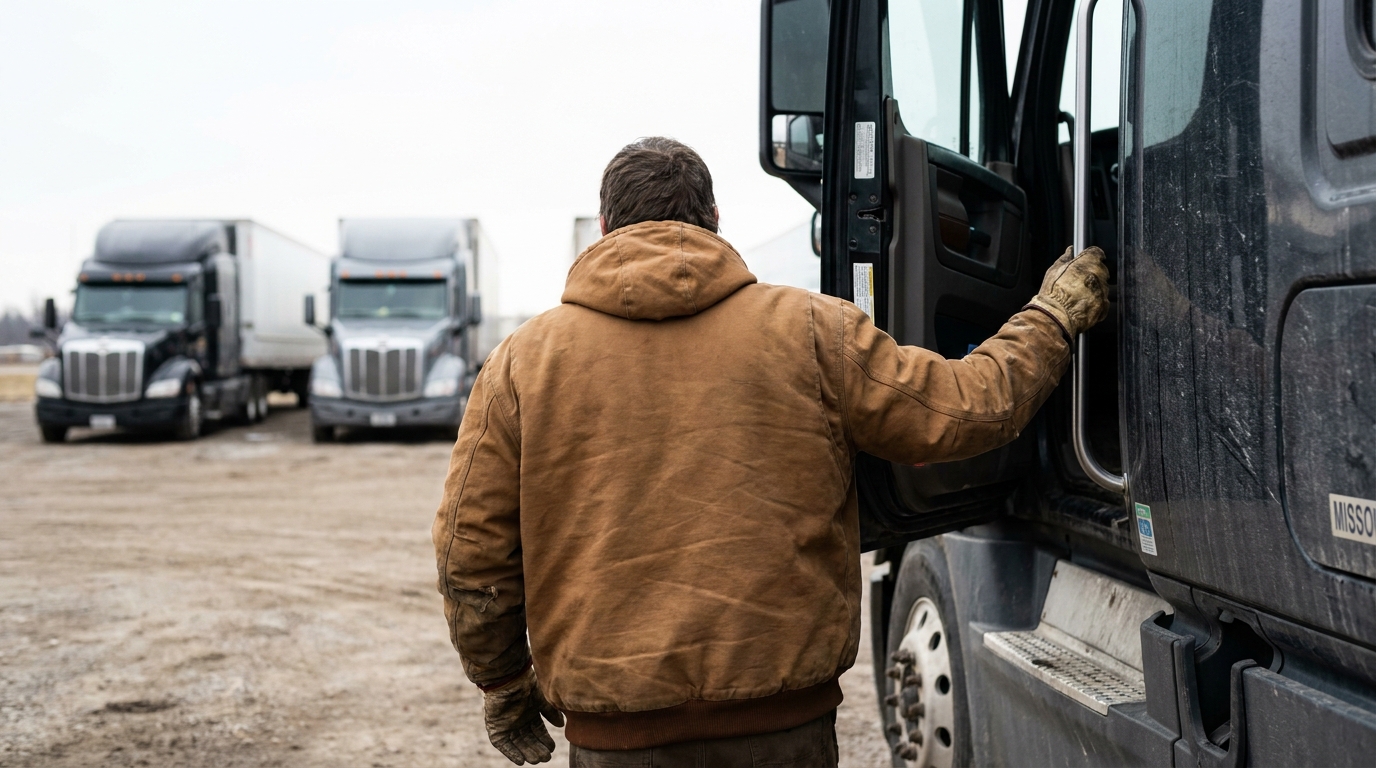
Multiple parties often share responsibility for a truck crash, meaning multiple payment sources may be available. Commercial trucking involves drivers, motor carriers, leasing companies, brokers, repair vendors, and parts manufacturers. Any may bear some fault, and identifying each potentially responsible party is central to building a full claim for truck accident compensation.
Determining trucking company liability in Missouri frequently turns on the relationship between driver and carrier. A motor carrier may be responsible for a driver’s negligence under agency principles and may also be directly liable for its own conduct, such as negligent hiring, inadequate training, or pushing schedules that encourage hours-of-service violations. Pinpointing each defendant expands the insurance pool available to pay a claim. If you are unsure who you can hold accountable, our overview of who can be sued after a truck accident walks through common defendant categories.
💡 Pro Tip: Request that the trucking company preserve the electronic control module (ECM) and black-box data in writing immediately. This perishable evidence can disappear quickly and often reveals speed, braking, and hours of operation before impact.
How Missouri’s Comparative Fault Rules Affect Your Recovery
Missouri uses pure comparative fault, meaning an injured person can recover even if partially at fault. Under RSMo § 537.765.1, the doctrine of pure comparative fault applies, and contributory fault as a complete bar to recovery has been abolished. Your potential recovery is reduced in proportion to your share of fault rather than eliminated entirely.
A defendant can raise your own fault as an affirmative defense, lowering the amount you collect. RSMo § 537.765.2 allows a defendant to plead and prove the plaintiff’s fault, and any fault assigned to you diminishes your compensatory damages proportionally. This is why insurers often try to shift blame onto the injured party. Careful evidence collection, police reports, witness statements, and camera footage, helps counter those tactics.
💡 Pro Tip: Avoid giving a recorded statement to the trucking company’s insurer before speaking with counsel. Adjusters may use your words to assign you a larger share of fault and reduce what they pay.
When One Defendant Can Be Made to Pay the Entire Judgment
Missouri law can hold a heavily at-fault defendant responsible for the full judgment amount. Under the statute governing joint and several liability, if a defendant bears fifty-one percent or more of fault, that defendant is jointly and severally liable for the entire judgment. A defendant found to bear less than fifty-one percent of fault is generally responsible only for its proportionate share, except in limited circumstances, such as when another defendant was acting as that party’s employee.
Punitive damages, however, are treated differently. Each defendant pays only its assigned share of punitive damages. Missouri also keeps these allocation mechanics away from the jury, as no party may disclose to the trier of fact the impact of this section.
| Type of Damages | How Liability Is Allocated |
|---|---|
| Compensatory (majority-fault defendant) | Jointly and severally liable for the full judgment |
| Punitive | Severally liable for each defendant’s own share |
Insurance Coverage Disputes That Decide Who Pays
Even when fault is clear, who actually pays often comes down to insurance coverage disputes. Insurers regularly invoke policy provisions to limit or avoid payment, and those provisions can determine whether a victim is compensated. Coverage fights are common in cases involving uninsured or underinsured motorists and employer-provided policies.
Missouri courts have examined whether employee-exclusion clauses bar recovery under an employer’s uninsured motorist coverage. In one Missouri Court of Appeals decision, a worker brought suit against his employer and the employer’s insurer seeking recovery from a crash involving an uninsured vehicle, and the trial court initially granted summary judgment for the insurer based on policy provisions excluding employee claims. That case illustrates how an injured worker may have multiple potentially responsible payers and how insurers use policy language to resist paying. The enforceability of such exclusions depends on specific policy language and facts.
💡 Pro Tip: Ask whether multiple policies might apply to your crash, including your own uninsured/underinsured motorist coverage. Layering coverage can matter when a truck driver is underinsured or when a commercial policy contains exclusions.
Deadlines That Can Determine Whether You Collect Anything
Filing on time is critical to whether any settlement is ever paid. Missouri’s five-year filing period under RSMo 516.120(4) currently applies to “any other injury to the person or rights of another, not arising on contract,” which covers personal injury claims from truck crashes. The same five-year period also applies to property damage.
Missouri lawmakers have considered shortening this window, but no such change is currently in effect. House Bill 68 would have reduced the filing period to two years for injuries occurring after August 28, 2025; however, the bill passed the Missouri House but did not receive a Senate vote, so it did not become law. The five-year statute of limitations still governs personal injury claims. Similar legislation could be reintroduced in a future session, so do not wait to act and confirm the current deadline with counsel.
Courts generally interpret exceptions to filing deadlines narrowly. In limited circumstances, a deadline may be extended under the “capable of ascertainment” discovery rule or when a defendant is absent from the state, but that depends heavily on specific facts. Because missing the applicable deadline can bar recovery entirely, confirming the correct date with counsel is essential.
Protecting Your Claim From the Start
Steps you take in the first days after a crash often shape the value of a truck accident settlement Missouri victims can pursue. Preserving evidence, documenting injuries, and avoiding early missteps all strengthen your position. Consider:
- Seek prompt medical care and keep records of every treatment and future-care recommendation.
- Photograph the scene, vehicles, and visible injuries when possible.
- Identify witnesses and request that camera footage and ECM data be preserved.
- Keep a record of lost wages, out-of-pocket costs, and how injuries affect daily life.
Working with an experienced St. Louis truck accident lawyer helps you document present and future damages while countering insurer tactics. Our page for our St. Louis truck accident attorneys explains how we investigate liability and pursue full compensation. Every case is fact-specific, and outcomes depend on the particular evidence and parties involved.
Frequently Asked Questions
Who pays a truck accident claim when several parties are at fault?
Payment may come from multiple sources when fault is shared. The driver, motor carrier, maintenance vendors, or parts manufacturers and their insurers may each contribute. Under Missouri law, a defendant bearing fifty-one percent or more of fault can be held jointly and severally liable for the full compensatory judgment, while a defendant below that threshold is generally liable only for its own share.
Can I still recover if I was partly responsible for the crash?
Yes, Missouri follows pure comparative fault under RSMo § 537.765.1. Your recovery is reduced by your percentage of fault rather than barred. However, a defendant may plead your fault as an affirmative defense under RSMo § 537.765.2.
How long do I have to file a Missouri truck accident lawsuit?
A five-year period generally applies under RSMo 516.120(4). House Bill 68 proposed reducing this to two years for injuries occurring after August 28, 2025, but the bill did not become law, so the five-year deadline still applies. Because similar legislation could return and exceptions are interpreted narrowly, confirm the correct deadline with an attorney promptly.
What if the at-fault driver was uninsured?
You may have other coverage available. Uninsured and underinsured motorist policies, including your own or an employer’s, can apply, though insurers sometimes invoke exclusions to limit payment. Missouri courts have scrutinized employee-exclusion clauses, and whether they apply depends on policy language and facts.
Does property damage to my vehicle fall under the same deadline?
Generally, yes. RSMo 516.120(4) addresses injury to goods and chattels, so property damage claims have followed the same five-year period that applies to related personal injury claims when a single crash causes both.
Bringing the Pieces Together
Who pays a truck accident settlement in Missouri depends on who is at fault, how fault is allocated, and which insurance policies respond. Multiple defendants may share responsibility, comparative fault can adjust your recovery, and a majority-fault defendant may be liable for the entire compensatory judgment. Coverage disputes and filing deadlines add complexity, which is why early action and thorough evidence preservation matter. Because every crash is different, the right strategy depends on your specific facts.
If you are facing the aftermath of a serious truck crash, the attorneys at Halvorsen Klote Davis are ready to evaluate your case and pursue the compensation you deserve. Call (314) 451-1314 or visit our contact page to schedule a consultation today. The sooner you reach out, the more we can do to protect your claim.