That Routine App Update Screen May Have Quietly Changed Your Legal Rights
Key Takeaways: Tapping "I Agree" on an Uber terms update may create a new agreement, starting a fresh opt-out window and potentially renewing your consent to arbitrate, even if you previously opted out. Missouri analyzes clickwrap acceptances as ordinary contract questions, and under RSMo § 435.350 written arbitration agreements are valid, enforceable, and irrevocable save upon such grounds as exist at law or in equity for revoking any contract, with the insurance and adhesion exceptions applying only to future-controversy provisions. The state’s ten-point capital letters notice rule in § 435.460 was written for paper contracts, and Bunge Corp. holds it may not defeat arbitration provisions covered by the Federal Arbitration Act. The adhesion carve-out in § 435.350 is likewise limited by federal preemption in interstate commerce transactions. Courts focus on whether the update screen gave conspicuous notice, whether the opt-out deadline was disclosed accessibly, and which version was live when you tapped. Preserving screenshots, receipts, and proof of opt-out notice may be critical.
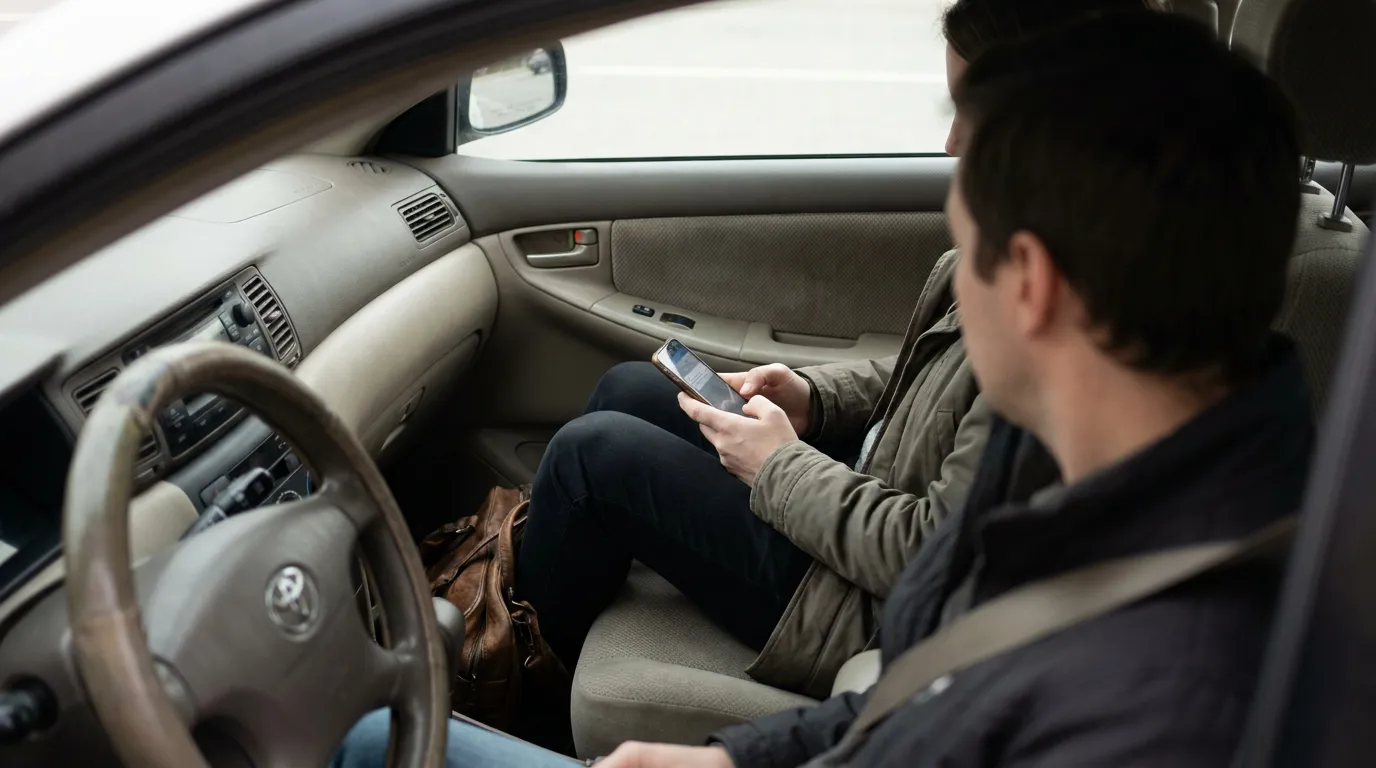
If you tapped "I Agree" on an Uber terms update after your crash, you may have restarted your opt-out clock and renewed consent to arbitrate claims you didn’t realize were covered. Each re-acceptance can operate as a fresh agreement depending on the version presented, potentially affecting whether your case is heard by a jury or private arbitrator.
If an app update appeared before or after your collision and you’re unsure what you agreed to, the team at Halvorsen Klote Davis can review the timing and terms with you. Call (314) 451-1314 or contact us now to discuss your options.
How a Clickwrap Acceptance Becomes a Binding Contract in Missouri
Missouri treats arbitration first as a contract question, not a procedural technicality. The state’s arbitration law is codified in Title XXVIII, "Contracts and Contractual Relations," and courts ask whether the parties assented, and to what terms, before reaching other issues. A clickwrap acceptance is evaluated under ordinary state-law contract principles.
The baseline statutory rule is broad but not unlimited. Under RSMo § 435.350, a written agreement to submit any existing controversy to arbitration, or a provision in a written contract (except contracts of insurance and contracts of adhesion) to submit future controversies to arbitration, is valid, enforceable, and irrevocable, but in both cases only "save upon such grounds as exist at law or in equity for the revocation of any contract." This allows ordinary contract defenses, lack of assent, fraud, and unconscionability, to challenge arbitration terms accepted through in-app prompts; defenses targeting only arbitration agreements generally don’t survive FAA preemption.
Missouri’s version of the Uniform Arbitration Act, beginning at § 435.350, excepts "contracts of insurance and contracts of adhesion" from future-controversy agreements. While app terms fit the adhesion format, courts have generally held the FAA preempts that state-law exception for contracts involving interstate commerce, which is why many rideshare disputes turn on assent and unconscionability instead.
Why the Opt-Out Window Resets After a Rideshare Terms Update
Each new acceptance may create a new agreement with its own opt-out deadline. Uber’s terms historically allow users a limited window, commonly days from acceptance, to submit written notice declining arbitration. When you tap through an update, the prior window may be superseded by a fresh one tied to the newer agreement.
That reset can cut both ways. If you already opted out under an earlier version, tapping "I Agree" on a later version may constitute renewed arbitration consent unless the new terms preserve your prior election. Some versions state that a valid opt-out remains effective; others are silent or ambiguous, and ambiguity is construed against the drafter.
What Courts Typically Examine
Courts assessing app-based arbitration agreement acceptance look at:
- Whether the update screen gave reasonably conspicuous notice that new arbitration terms applied
- Whether the "I Agree" button was tied unambiguously to those terms
- Whether the opt-out procedure and deadline were disclosed accessibly
- Whether the user could realistically decline and still use the service
- What version was actually presented on the acceptance date
💡 Pro Tip: Screenshot every terms update prompt and save the confirmation email. Version history and timestamps are frequently contested facts in these disputes.
The Statute Written for Paper, Applied to Phones
Missouri imposes a formatting requirement better suited to paper contracts. Under § 435.460, each contract subject to §§ 435.350 to 435.470 must include, adjacent to or above the signature space, a statement in ten point capital letters reading substantially "THIS CONTRACT CONTAINS A BINDING ARBITRATION PROVISION WHICH MAY BE ENFORCED BY THE PARTIES." There is no signature space on an in-app update screen, which is why this standard maps awkwardly onto clickwrap.
Missouri appellate courts have applied that requirement where it governs. However, the statute’s reach is limited by federal preemption, so its practical effect in rideshare cases is often narrow. The analysis instead centers on whether the screen itself communicated the new terms and the deadline to decline.
Why Federal Preemption Limits the Notice Argument in an Uber Arbitration Clause Injury Claim
The § 435.460 notice rule generally cannot defeat arbitration in contracts involving interstate commerce. Case annotations cite Bunge Corp. v. Perryville Feed & Produce Co., 685 S.W.2d 837 (Mo. banc 1985), for the principle that the section may not defeat arbitration provisions within FAA coverage. Rideshare terms typically invoke the FAA expressly, and the FAA may apply regardless if the transaction involves interstate commerce. A missing Missouri-style notice in an app update may rarely void the arbitration framework on its own.
Missouri and federal courts have addressed preemption limits in several contexts. Annotations to Missouri’s arbitration validity statute cite Standard Security Life Ins. Co. v. West, 127 F.Supp.2d 1064 (W.D. Mo.), aff’d 267 F.3d 821 (8th Cir. 2001), and Sturgeon v. Allied Professionals Insurance Co., 344 S.W.3d 205 (Mo. App. E.D. 2011), which involved insurance-specific preemption questions. These authorities suggest the statutory exceptions are not a general escape hatch for consumer app terms.
Timing matters because the statutory text predates the technology. The notice provision dates to 1980 (L. 1980 H.B. 1203) and has not been amended since its original enactment, before smartphone clickwrap existed. How a re-acceptance prompt restarts an opt-out window is governed by case law on assent rather than statutory language. Readers often benefit from understanding Missouri fault rules for rideshare before evaluating the forum question.
| Issue | Paper Contract Analysis | In-App Update Analysis |
|---|---|---|
| Governing framework | § 435.460 notice requirement | Case law on assent and notice |
| Assent evidence | Physical signature block | Tap logs, version history, timestamps |
| Common challenge | Missing ten-point notice | Whether the screen was conspicuous |
| Preemption effect | FAA may override state notice rule | FAA typically invoked by the terms |
What Happens Procedurally After You File Suit
Missouri law supplies the court mechanism a company may use. Section 435.355 governs proceedings to compel or stay arbitration, which a defendant may invoke after a user taps "I Agree" and later files suit; a defendant sued in or removing to federal court may instead proceed under the FAA.
Whether an in-app update screen provided adequate notice of arbitration terms and the opt-out deadline is a question courts resolve on the specific record. Two riders who tapped different versions on different dates may receive different answers.
Stakes Are Higher Than Most Users Assume
Arbitration outcomes can be difficult to unwind. A university law repository study on consumer arbitration enforceability notes that businesses are increasingly including arbitration provisions in Terms & Conditions and other consumer agreements, and that judicial review of an award issued under a valid arbitration agreement is narrow, limited largely to statutory grounds such as fraud or arbitrator misconduct. Limited judicial review is one reason the opt-out window deserves more attention than a routine update screen suggests.
💡 Pro Tip: If you were injured and have not yet accepted a pending update, pause before tapping and speak with counsel first. Preserving the question is often easier than litigating it afterward.
Documentation habits may help protect uber passenger rights in these disputes. Preserve your ride receipts, trip records, medical documentation, and any correspondence with the company. If you submitted an opt-out notice, keep proof of delivery. A uber arbitration clause injury claim lawyer can help evaluate whether an arbitration opt-out reset may apply to your circumstances.
Frequently Asked Questions
1. Does tapping "I Agree" always waive my right to sue?
Not necessarily. Under § 435.350, arbitration agreements are valid "save upon such grounds as exist at law or in equity for the revocation of any contract," which may preserve generally applicable contract defenses. Whether a specific clickwrap acceptance binds you depends on the notice provided, the version presented, and surrounding facts.
2. Can I still opt out after a missouri Uber injury has occurred?
Possibly, if the applicable window has not closed. Opt-out deadlines run from the date of acceptance rather than the crash date, so the timing of your most recent uber app agreement acceptance may be controlling. An attorney can help identify which version may apply.
3. Does Missouri’s ten-point notice rule void Uber’s arbitration clause?
Usually not. Bunge Corp. v. Perryville Feed & Produce Co., 685 S.W.2d 837 (Mo. banc 1985), holds that § 435.460 may not defeat arbitration provisions covered by the Federal Arbitration Act. Because rideshare transactions typically involve interstate commerce and the terms invoke the FAA, the state formatting rule may rarely resolve the issue alone.
4. What if I never actually read the updated terms?
Courts focus on whether reasonable notice was given and whether the user manifested assent, rather than whether you actually read the document. An update screen that buried or obscured the arbitration terms may support an argument against enforcement.
5. Does the adhesion exception in § 435.350 help me?
It may be limited. The statute excepts contracts of adhesion from its future-controversy provision, but courts have generally held the FAA preempts that carve-out for agreements involving interstate commerce. Many riders litigate assent and unconscionability instead.
Protecting Your Claim Starts Before the Next Update Prompt
An uber arbitration clause injury claim may turn on the update screen you tapped through in seconds. Missouri’s arbitration act supplies the baseline validity rules, § 435.460 supplies a notice standard designed for paper, and federal preemption may limit how far that standard reaches. What remains is often a contract question about whether you meaningfully assented and whether an opt-out window was still open. Because these outcomes depend heavily on version history, timing, and the specific record, no general article can predict how a particular dispute will resolve.
If you were hurt in a St. Louis rideshare collision and are unsure whether a terms update affected your rights, the attorneys at Halvorsen Klote Davis are available to review your situation. Call (314) 451-1314 or request a consultation to get started.
Disclaimer: This content is for informational purposes only and is not legal advice. Every case is unique, and results may vary. Consult an attorney about your specific circumstances.