When Being Mostly at Fault Does Not End Your Claim
Key Takeaways: Missouri follows a pure comparative fault rule that lets even a driver found 99 percent responsible recover a reduced share of damages. This doctrine was adopted in Gustafson v. Benda and codified for products liability in RSMo § 537.765; your compensation is diminished by your percentage of fault but not barred, and the defendant must prove your fault as an affirmative defense. When multiple drivers are involved, RSMo § 537.067 governs apportionment, including joint-and-several liability for defendants 51 percent or more at fault. Injured drivers have five years under RSMo § 516.120 to file claims, though government deadlines can be much shorter. Preserving proof early and acting before the deadline are essential.
If you caused most of a wreck but still suffered injuries, Missouri law may still allow you to recover something. Many assume being blamed for a crash wipes out their right to compensation, but that is not how this state handles fault. Under Missouri’s pure comparative fault rule, even a driver found 99 percent responsible can pursue a reduced share of damages, setting Missouri apart from harsher approaches used elsewhere.
If you are weighing your options after a collision, the team at Halvorsen Klote Davis can help you understand how fault allocation might affect your case. Call us at (314) 451-1314 or reach out through our online case review form to discuss what happened.

Is Missouri an At-Fault State for Car Accidents?
Yes, Missouri is an at-fault state. In an at-fault system, the driver who causes a crash, and that driver’s insurer, bear responsibility for the resulting harm. This differs from no-fault states, where your own insurer pays regardless of who caused the wreck.
What makes Missouri notable is how it measures partial fault. Missouri applies pure comparative fault, which allows a partially responsible driver to recover damages reduced only by their percentage of blame. This approach is more generous than systems used in most of the country.
How Pure Comparative Fault Works in Missouri
Pure comparative fault means your compensation is reduced by your share of fault but not eliminated. For car accident claims, this rule comes from the Missouri Supreme Court’s decision in Gustafson v. Benda, while the legislature codified it for products liability in RSMo § 537.765.2, which provides that "any fault chargeable to the plaintiff shall diminish proportionately the amount awarded as compensatory damages but shall not bar recovery."
The Practical Math of Reduced Recovery
A simple example shows how the reduction works. If a jury values your total damages at $100,000 and assigns you 40 percent of the fault, your award would be reduced by that 40 percent, leaving $60,000. If you were 99 percent at fault, you could still recover the remaining 1 percent.
Here is how proportional reduction can affect a hypothetical $100,000 claim:
| Percentage of Fault Assigned to You | Reduction | Potential Recovery |
|---|---|---|
| 10% | $10,000 | $90,000 |
| 50% | $50,000 | $50,000 |
| 75% | $75,000 | $25,000 |
| 99% | $99,000 | $1,000 |
These figures are illustrative only. Insurers routinely dispute the percentages, and actual outcomes depend heavily on the specific facts and evidence. Courts and juries weigh testimony, records, and physical evidence.
Who Has to Prove You Were at Fault
In Missouri, the defendant carries the burden of proving your fault. RSMo § 537.765.2 states that a "defendant may plead and prove the fault of the plaintiff as an affirmative defense," and Missouri courts apply this same rule to negligence cases. The other side must put forward and support the claim that you share blame.
This burden shapes how a dispute is fought. Comparative fault is an affirmative defense, so the insurer defending the claim must come forward with evidence supporting the percentage it wants assigned to you. For a deeper explanation, this overview of pure comparative fault Missouri breaks it down in plain terms.
The Landmark Case Behind Missouri’s Rule
Missouri’s pure comparative fault system traces back to Gustafson v. Benda. In that case, the Missouri Supreme Court took what has been described as a radical step toward just allocation of tort losses among all responsible parties, moving the state away from a rigid all-or-nothing framework.
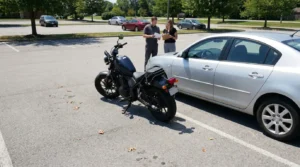
The facts connect directly to vehicle crashes. The dispute arose when the plaintiff, Tom Gustafson, was passing a line of cars on his motorcycle, showing how the doctrine applies squarely to roadway collisions.
From Complete Bars to Proportional Loss
Before Gustafson, an injured person’s own negligence could completely block recovery. The decision abolished contributory negligence as a complete bar and the doctrine of last clear chance. The legislature later codified this for products liability in RSMo § 537.765.1, stating that "contributory fault, as a complete bar to plaintiff’s recovery in a products liability claim, is abolished. The doctrine of pure comparative fault shall apply."
The result spreads losses across everyone who contributed to the harm. Missouri law now recognizes pure comparative fault that distributes losses to all responsible parties, allowing a mostly-at-fault driver to still seek reduced compensation.
How Missouri Compares to Other States
Missouri’s pure comparative approach is a minority rule across the country. Over 30 states use modified comparative negligence, while only about a dozen use pure comparative negligence. You can review the differences in this comparative negligence rules by state resource.
The three main approaches produce very different outcomes:
- Contributory negligence: Any fault by the injured person can bar recovery entirely.
- Modified comparative negligence: Recovery is barred once the injured person crosses a 50 or 51 percent fault threshold.
- Pure comparative negligence: The injured person can recover damages reduced only by their percentage of fault, even if very high.
Missouri sits firmly in that third category. Because Missouri follows pure comparative fault, a plaintiff can recover something regardless of their degree of fault, even when found 99 percent responsible, with the award reduced by that percentage.
How Fault Is Divided Among Multiple Drivers
When several drivers share blame, Missouri uses specific allocation rules. RSMo § 537.067.1 provides that if a defendant is found to bear 51 percent or more of fault, that defendant is jointly and severally liable for the judgment.
Punitive damages follow a narrower rule. Under RSMo § 537.067.2, defendants are only severally liable for the percentage of punitive damages attributed to them by the trier of fact.
A procedural detail also affects how these rules reach the jury. RSMo § 537.067.3 states that in all tort actions, no party may disclose to the trier of fact the impact of that section. Jurors decide fault percentages without being told how joint-and-several liability will apply.
💡 Pro Tip: Because Missouri limits what the jury hears about liability mechanics, how your evidence frames each driver’s conduct can carry significant weight. Preserving photos, dashcam footage, and witness contact information early helps support the fault percentages you may need to contest.
The Deadline That Can End Your Case
Even a strong comparative fault argument means little if you miss the filing deadline. Missouri sets a five-year window for most personal injury actions. RSMo § 516.120 lists, "within five years," an action "for any other injury to the person or rights of another, not arising on contract and not herein otherwise enumerated."
Courts interpret deadline exceptions narrowly. Tolling or delayed-discovery arguments may apply in limited circumstances, and they do not apply automatically. Government administrative claim deadlines are separate from this civil statute of limitations and can be much shorter. You can read the full text of the five-year filing period on the state’s official statute site.
💡 Pro Tip: Do not wait until close to the deadline to evaluate your options. Evidence fades, witnesses become harder to reach, and a rushed filing rarely serves an injured driver well.
Frequently Asked Questions
Can I really recover money if I was mostly to blame?
Generally, yes, though the amount is reduced. Under Missouri’s pure comparative fault rule, adopted in Gustafson v. Benda and codified for products liability in RSMo § 537.765, your compensatory damages are diminished by your percentage of fault but not barred. A driver found 99 percent at fault could still recover the remaining share.
Is Missouri an at fault state for car accidents or a no-fault state?
Missouri is an at-fault state. The driver who causes a crash and that driver’s insurer are generally responsible for the harm, unlike no-fault states where your own insurer typically pays regardless of who caused the collision.
Who decides my percentage of fault?
The trier of fact, usually a jury, assigns the percentages. The defendant must plead and prove your fault as an affirmative defense, a burden recognized in Missouri case law and codified in RSMo § 537.765.2. Outcomes depend on the specific evidence.
How long do I have to file a car accident lawsuit in Missouri?
Missouri allows five years for personal injury actions under RSMo § 516.120. Certain exceptions may extend or shorten that period in limited circumstances, and courts read those exceptions narrowly. Administrative claim deadlines against government entities are separate and can be far shorter.
What if more than one driver was at fault?
Missouri allocates responsibility using RSMo § 537.067. A defendant found to bear 51 percent or more of the fault can be jointly and severally liable for the judgment, while punitive damages are handled on a several basis.
Protecting Your Right to Recover After a St. Louis Crash
Being blamed for a wreck does not mean walking away empty-handed in Missouri. Because the state follows pure comparative fault, partial responsibility reduces recovery proportionally rather than eliminating it, and the burden of proving your fault falls on the other side. The five-year filing window and how fault is apportioned among multiple drivers mean timing and evidence deserve careful attention. If you are searching for a trusted Missouri car accident lawyer, understanding these principles puts you in a stronger position.
If you were hurt in a St. Louis car accident and worry your share of blame will cost you everything, let Halvorsen Klote Davis review your situation. Call our team at (314) 451-1314 or send us a message through our confidential contact page to learn how Missouri’s comparative fault rules may apply to your claim. Taking that first step early helps protect both your evidence and your deadline.