3 Years to File Wrongful Death Claims in Missouri: Don’t Miss Deadlines
When Time Matters Most: Understanding Missouri’s Wrongful Death Filing Deadline If you’ve lost a loved one in a motorcycle accident, Missouri law provides three years from the date of death to file a wrongful death claim. Waiting too long could mean losing your right to seek justice and compensation forever.

Missouri Law Protects You Even If You’re Partially at Fault
Worried You Might Share Blame for Your Car Accident? Missouri Law Still Protects Your Right to Compensation If you’ve been in a car accident and think you contributed to what happened, you can still recover damages. Missouri’s pure comparative fault system allows compensation even if you were partially responsible –

What Happens When You’re 80% at Fault in a Missouri Crash?
When the Police Report Says You’re Mostly Responsible Being deemed 80% at fault for a car accident can feel overwhelming when dealing with injuries, vehicle damage, and insurance companies. Missouri’s comparative fault laws create unique challenges for drivers primarily responsible for collisions. Unlike states that completely bar recovery if you’re

$500 Property Damage Triggers Missouri Uninsured Driver Actions
When $500 in Property Damage Changes Everything for Missouri Drivers A fender bender might seem minor until the other driver has no insurance and damage exceeds $500. This amount triggers serious legal requirements under Missouri law that many drivers don’t understand until it’s too late. Missouri’s uninsured driver laws create

Should Attorneys File Sunshine Law Requests for Your Crash Report?
After the Crash: Understanding How Legal Representation Accesses Critical Evidence When a car accident occurs on Missouri roads, the police report becomes crucial to your case. Many accident victims don’t realize their attorney faces specific legal requirements to obtain this vital evidence. Under Missouri’s public records laws, attorneys cannot simply

What Is Missouri’s 51% Joint Liability Rule?
Your Car Accident Case May Involve Multiple At-Fault Parties If you’ve been injured in a multi-vehicle accident on Interstate 270 or Highway 44, you’re likely wondering how Missouri determines who pays for your damages when several drivers share blame. Missouri follows the 51% joint liability rule under Mo. Rev. Stat.
If you or a family member are injured, killed, or in some way physically and/or financially impacted due to negligence, there's no risk or cost when contacting our firm. Halvorsen Klote Davis always offers a free, no-risk consultation. Our lawyers can help with every aspect of the legal process.
Halvorsen Klote Davis works on a contingency fee basis. The contingent fee is important and it is the key to the courthouse for millions of Americans, no matter how rich or poor. Therefore, if you are injured, out of work, and have no money, you can still hire an experienced attorney from Halvorsen Klote Davis with no up-front costs or fees.
Compensation depends on the case. You need to consider lasting medical costs, lost wages, and other special, general, and even punitive damages. Our lawyers will help you get every cent.
Pursuing a personal injury claim can be difficult. For the best opportunity of obtaining the maximum amount of compensation to which you are entitled, it is in your best interest to seek representation from an experienced personal injury attorney. Halvorsen Klote Davis can review your case and determine a course of action to bring about a successful resolution.
Personal injury cases are handled on a contingency fee basis. Payment for our legal representation is contingent on our reaching a successful case resolution in the form of either a verdict or settlement on your behalf. In the event of a successful case resolution, we will take a pre-determined percentage of the recovery as payment. If we do not obtain financial compensation on your behalf, you owe us nothing for our services. To learn more about your options, please contact Halvorsen Klote Davis. today. Our personal injury lawyers can review your case and advise you of your legal options.
Every personal injury case is different. Personal injury law covers a variety of legal areas. The amount of financial compensation you may be eligible for depends on the circumstances of your specific case. Here are some factors which will determine what your case is worth: past and future medical expenses, loss of income in the past and loss of ability to earn income in the future, past and future pain and suffering, debilitation, disfigurement, scarring, mental anguish, and loss of ability to enjoy life. This is not an exhaustive list but hopefully it helps you get an understanding of how your case will be valued.
Some claims are clear-cut with regard to liability, yet still may take several months to conclude with a settlement. Others are more complex, with the liable party making every effort to avoid paying a claim. They often engage the services of high-powered law firms to try to defend against a large claim, especially in cases of medical malpractice or product liability claims. Therefore, it really depends on the circumstances of your case and who the defendant is in your case.
It is important that you partner with an attorney familiar with these cases and with a proven record in litigating serious injury claims. Sometimes, a litigated case can take a while to reach a final resolution. However, the attorneys at Halvorsen Klote Davis take an aggressive approach and are always very well prepared to get the case finalized as quickly as possible.
There is a statute of limitations, or time limit, for every lawsuit in both Illinois and Missouri, including personal injury lawsuits. You must file your claim within the statute of limitations. If you or someone you love has been injured as a result of the reckless and negligent actions of another party, we urge you to contact Halvorsen Klote Davis as soon as possible. Preparing for a personal injury lawsuit can be a time-consuming process. If you hesitate to seek legal counsel, it can seriously jeopardize your chances of being justly compensated for your suffering.
Generally speaking, negligence is acting in a careless, irresponsible or unreasonable manner. When someone does not behave in the way of an “ordinary reasonable person” and does not meet what is considered to be acceptable behavior by society, they can be deemed to be negligent. It will likely be the responsibility of the jury during a trial to determine what this behavior is and whether the actions of the defendant meet these standards.
If you were partly at fault, your burden of responsibility in the accident will be taken into account if and when we take on your case. Bearing part of the responsibility of the accident can limit the amount of compensation you obtain in a settlement or verdict, but it does not automatically eliminate your eligibility for compensation.
At Halvorsen Klote Davis, we take cases on a contingency fee. This enables people who ordinarily cannot afford to hire a lawyer, who cannot afford to pay a fee up front, to hire an attorney who takes a fee out of the recovery at the end of the case.
Why is this important? Because the other side, that is the defendant, will have its insurance company hire a law firm. The insurance company pays for the defendant’s lawyers. The insurance company will pay the lawyers and their law firm hourly. That is, the defendant’s lawyers will bill for every hour that every lawyer at that firm puts into the case. Their lawyers get paid to spend more time on the case. They have an incentive to spend as much time as possible on the case and even to drag it out — and they always do. The lawyers on the other side of us only represent insurance companies or large corporations. They have ongoing relationships with all of these companies and represent these companies on a regular basis. That is why you need a lawyer.
If you receive a settlement offer soon after an accident by the insurance company directly, you can assume that it will be far lower than you could recover with the help of an experienced personal injury lawyer at Halvorsen Klote Davis. We advise that you do not accept any settlement without having your case evaluated first.
Ultimate Guide to Missouri Drunk Driving Accident Laws
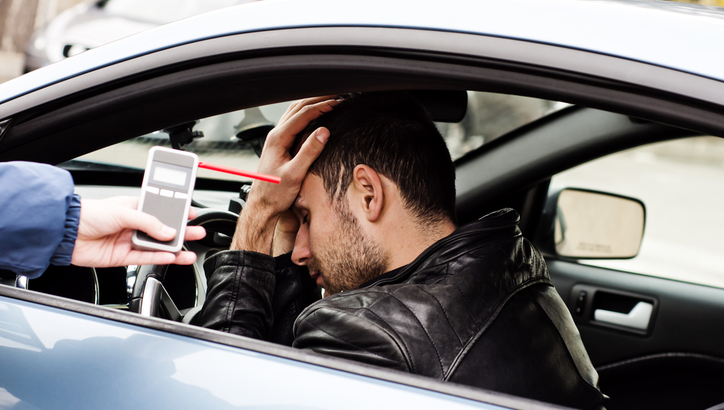
Driving under the influence (DUI), also called driving while intoxicated (DWI), is illegal everywhere in the United States. The Code of Federal Regulations Title 36, Chapter 1, §4.23 states that a driver is considered to be driving drunk with a blood alcohol content of .08 percent or greater. The punishments for a DWI in St. Louis and Missouri are laid out in Missouri Revised Statute §577.010.
Below you can find a comprehensive guide to Missouri's drunk driving accident laws. If you or a loved one has been injured by a drunk driver, call the St. Louis car accident lawyers of Halvorsen Klote Davis today at 877-51-HKLAW or contact us online for a free case review.
Negligence Per Se in St. Louis, Missouri Drunk Driving Accidents
Negligence per se is a doctrine in Missouri tort law that says that anyone who breaks the law and injures you is automatically liable for your injuries.
Typically in a tort case, your personal injury lawyer will have to prove the five elements of negligence in order to hold someone liable for your injuries. The elements are:
- Duty of care
- Breach of care
- Cause in fact, or actual cause
- Proximate cause
- Harm
Anyone who drives in Missouri owes you a duty of care. Under negligence per se, anyone who drives drunk automatically breaches their duty of care, as drunk driving is illegal. So, the burden of proof for the first two elements are essentially eliminated; you will only have to prove that the driver was drunk and that your car accident caused your injuries.
Dram Shop Laws in St. Louis, Missouri Drunk Driving Accidents
While a drunk driver is automatically liable for your injuries, licensed alcohol vendors in Missouri can also be found liable for your injuries if they knowingly overserved a patron who later caused your accident. This is commonly referred to as the Dram Shop Rule.
Missouri Revised Statute §167;537.053 generally prohibits dram shop liability. There two important exceptions where you can still make a claim:
- If the patron was "visibly intoxicated," meaning they displayed:
- Significantly uncoordinated physical action
- Significant physical dysfunction
- If the bar, restaurant or employee knew or "should have known" that the patron was under the age of 21
Revised Statute §537.053 also states that a blood alcohol content above .08% alone is not prima facie, or legally sufficient to support liability of an alcohol vendor. You and your drunk driving accident lawyers will have to prove the establishment and their employees witnessed physical impairment, such as:
- Stumbling or falling
- Slurring when they talk
- Spilling their drink
- Knocking objects or other people over
- Significantly impaired motor movements
The alcohol sold must be meant to drink on the premises, such as in a restaurant or bar. So you would not be able to make a claim against a liquor store or grocery store.
Social Host Liability in St. Louis, Missouri Drunk Driving Accidents
Some states allow you to file a claim against a "social host," for example someone who hosts a party at their house, where someone drinks too much and later causes an accident. Missouri is not one of those states, even if the driver is a minor, according to Zeller v. Scafe 498 S.W.3d 846 (Mo. Ct. App. 2016).
Punitive Damages for St. Louis, Missouri Drunk Driving Accidents
One difference between drunk driving lawsuits and typical personal injury claims is that a plaintiff can often seek punitive damages, also called exemplary damages in Missouri. While actual or compensatory damages, such as economic loss and pain and suffering, are intended to compensate you for your injuries and related expenses, punitive damages are generally awarded to punish the defendant for extreme misconduct, deter future misconduct and set a public example.
Typically, you could seek punitive damages in drunk driving cases because the driver showed a deliberate disregard for your safety . Recently, the Missouri state legislature passed Senate Bill 591, which came into effect on August 28, 2020. The bill raised the burden of proof for awarding punitive damages in St. Louis and Missouri. Specifically, you and your drunk driving injury lawyers must show, by "clear and convincing evidence," that the defendant:
intentionally caused damage to the plaintiff or demonstrated malicious misconduct that caused damage to the plaintiff
The bill was specifically enacted in regards to medical malpractice cases, so it is not immediately clear how it will affect car accident or drunk driving cases. The St. Louis drunk driving accident lawyers of HK Law will pursue every possible avenue to get you the best compensation possible and hold drunk drivers accountable.
Missouri Revised Statute §510.261 stipulates that in order to be awarded punitive damages, you must be awarded compensatory damages.
Under Missouri law, half of the punitive damages you are awarded will go to the state's Tort Victims' Compensation Fund.
How Does a DWI Criminal Case Affect My Civil Claim in St. Louis, Missouri?
If somebody drives drunk and injures another person, the state will pursue a criminal case as they would against anybody who is caught breaking the law. Many people who were injured by a drunk driver have questions concerning how the drunk driver's criminal case affects their personal injury claim. Criminal cases are meant to punish drunk drivers, deter future drunk driving and keep dangerous people off of the roads. Civil cases are meant to compensate you for your damages. Some common questions our drunk driving accident lawyers receive are:
Do I Still Have a Claim if the Drunk Driver Was Found Not Guilty?
Yes. While a criminal conviction would likely help your case, it does not have a direct effect on your claim or prevent you from making one.
Is the Burden of Proof Different in a Civil Case and Criminal Case?
Yes. In a criminal case, the prosecutor will have to prove that the defendant was guilty beyond a reasonable doubt. That means that something such as small errors in the police report may allow the defense lawyer to get them out of charges.
In a civil case, the burden of proof is what's called a preponderance of evidence, meaning your drunk driving accident attorney will only have to prove that it is more likely than not that the driver was drunk. A police report that contains errors would still be able to be used as evidence.
In a civil case, the burden of proof may be lower, but you will still have to prove that the drunk driver caused the accident and caused your injuries. In a criminal case, the state does not have to prove anything except that the driver was intoxicated.
Can the Drunk Driver Use the Fifth Amendment?
Yes, but its application is not as strong in civil cases. The Fifth Amendment of the U.S. Constitution allows for a defendant to refuse to answer questions in legal proceedings. In a criminal case, if a drunk driver pleads the fifth, the state, judge and jury may not use it to infer guilt. However, in civil cases pleading the Fifth can be used as an implication of liability (Baxter v. Palmigiano, 425 U.S. 308 (1976)).
Should I Wait Until the Criminal Case Is Over to File a Personal Injury Claim?
No. The Missouri Statute of Limitations sets deadlines on when you can file personal injury claims, and criminal cases are often delayed. It's imperative to speak to a drunk driving accident lawyer immediately after you are injured by a drunk driver. The drunk driving accident lawyers of Halvorsen Klote Davis will collect evidence for your civil case while monitoring your criminal case.
Call HK Law Today
St. Louis Drunk Driving Accident Lawyers | Halvorsen Klote Davis
When you hire our St. Louis drunk driving accident lawyers, we keep you informed throughout your entire case and are available to answer any questions you have about your case 24 hours a day, 7 days a week. If you have any more questions about drunk driving personal injury claims in Missouri, or want to know if you have a drunk driving injury case, call HK Law's St. Louis drunk driving accident lawyers today at 877-51-HKLAW or contact us online.

Joel Halvorsen
Attorney at Law
Joel Halvorsen and his partner Greg Klote founded the Halvorsen Klote Davis law firm on the principle that injured people and their families should have access to the same quality legal representation as large insurance companies.

Greg Klote
Attorney at Law
Greg Klote is a partner and founder of Halvorsen Klote Davis.
Greg has successfully fought for people who were injured through no fault of their own. He became a lawyer to help make a difference in the lives of those who have been wronged and treated unfairly. to achieve the best results.

Nate Davis
Founding Partner
Nate Davis is an attorney at Halvorsen Klote Davis who focuses on helping injured individuals and families who have lost a loved one due to negligence.
He represents clients across Missouri and Illinois in personal injury cases ranging from car accidents to complex medical negligence claims. Nate has successfully tried cases to jury verdict and has been named a Missouri & Kansas Rising Star for five consecutive years.
If you have been injured as a result of the reckless, negligent and careless actions of another party, you can file a personal injury claim for damages. Individuals, businesses and governmental agencies have a legal responsibility to act in a manner that does not place others at unreasonable risk of harm or injury. If a party acts negligently and causes injury to another person as a result, he or she can be held liable for damages. At Halvorsen Klote Davis, an Illinois or Missouri personal injury lawyer can help you file a personal injury claim if you have been injured at the hands of another party. In the tragic event of a loved one’s death, we can also assist you in filing a wrongful death claim.
No, Debt Collectors cannot do this! They have to treat you honestly and fairly under the FDCPA!
No, Debt Collectors cannot do this! Debt Collectors are constantly coming up with new ways to attempt to collect debts. In fact, Debt Collectors have recently started using Facebook when collecting debts. See this article for more information on how debt collectors are using Facebook to collect debts and/or harass consumers.
No, Debt Collectors cannot demand that you pay them more money than what you owe. Of course, the amount you owe would include legal late fees, interest, etc.
No, Debt collectors are not allowed to contact you after you file bankruptcy. If they do, let your bankruptcy attorney know immediately.
No, Debt Collectors cannot threaten to take any action that they don’t intend to take against you. The FDCPA requires that they act honestly and respectfully when attempting to collect a debt!
No, under the FDCPA, Debt Collectors cannot threaten to sue you if they are not an attorney!
No, Under the FDCPA, Debt Collectors cannot lie to you or make any misrepresentations. If they tell you they are an attorney or work for a law firm and they don’t that is a violation of the FDCPA. If this has happened to you then you need to contact Halvorsen Klote Davis right away. First, to make sure that the debt collector is not a law firm and second to protect your rights against collection agency harassment.
No, Debt Collectors cannot call you over and over for purposes of harassment!
No, Debt Collectors cannot insult you! You have the right to be treated with respect! If they insult you, they have violated the FDCPA and you should contact a consumer attorney immediately.
No, Debt Collectors cannot use vulgar language, swear at you, be rude to you, treat you unfairly, etc.
No, Debt Collectors cannot contact you once you let them know you are represented by an attorney. If they do contact you afterward, then they are violating Federal Law. If this has happened to you, you should contact Halvorsen Klote Davis immediately.
No, they cannot call you and tell you that they will put a lien on your property unless, and only under certain circumstances, they are an attorney or law firm and actually intend to put a lien on your property. Most of the time when debt collectors threaten this, they are doing it for purposes for intimidation and therefore it is a violation of the FDCPA.
No, generally speaking, Debt Collectors cannot threaten to contact the police if you do not pay a debt. This is similar to the previous question. If a Debt Collector is threatening this type of behavior, then they are most likely perpetuating a scam. Do NOT pay scam artists!
No, Debt Collectors cannot threaten to arrest you if you don’t pay! We find that the majority of debt collectors that are threatening to arrest consumers are scam debt collectors. It is important that if a collection agency threatens to have you arrested you realize that, absent EXTREME circumstances, this will not happen.
No, as stated above, Debt Collectors cannot call you at work if you ask them to stop calling you at work!
No, Debt Collectors cannot call you at work if your employer prohibits personal calls and the debt collector knows this. If debt collectors are calling you at work you should tell them to stop and document the time that you told them to stop calling you at work. Collection agencies and debt collectors love to harass consumers at work because they know they are afraid of losing their jobs. The debt collectors often assume if they make the consumers afraid of losing money by losing their job they will be more apt to pay. This type of behavior is against Federal Law.
No, generally speaking, Debt Collectors cannot call your friends or family members! Furthermore, it is a violation of the FDCPA if debt collectors disclose the fact that you owe a debt to anyone other than your spouse (if you are married). If debt collectors are calling third parties, contact us immediately. It is very likely that they are breaking the law.
No, Debt Collectors cannot call you and tell you that they will garnish your wages unless, and only under certain circumstances, they are an attorney or law firm. Furthermore, if you don’t have an income, they cannot threaten to garnish your wages because you don’t have any. Furthermore if your wages are exempt from garnishment (because they come from social security, etc.) then they also cannot threaten to have them garnished. If you are being harassed by a debt collector contact Halvorsen Klote Davis today.
Debt Collectors, under the FDCPA, are basically any company or person collecting a debt that they didn’t originate. So, generally speaking, Original Creditors (the company you borrowed the money from) do not qualify as debt collectors and are not subject to the FDCPA.
Absolutely nothing! Since the Debt Collector will pay your attorney fees if you win, your attorney should be willing to handle your case on a contingency fee basis (meaning he/she only gets paid if you win) if he/she really believes you have a good case. At Halvorsen Klote Davis, you won’t pay a dime to bring an FDCPA claim against a Debt Collector.